LIC Lapsed Policy Revival: Actuarial Guide to Reinstating Risk Cover
When an insurance premium is not paid within the grace period (30 days for yearly, half-yearly, and quarterly modes; 15 days for monthly NACH mode), the policy enters a lapsed state. In a lapsed condition, all insurance protection ceases or is severely impaired, and death claims may be repudiated.
Fortunately, under IRDAI regulations and LIC operational guidelines, policyholders are granted a statutory revival window of 5 consecutive years from the date of the First Unpaid Premium (FUP) to reinstate their policy with full original benefits and unbroken bonus continuity.
The Four LIC Revival Pathways
The standard method: you pay all overdue premium installments in a single lump sum, along with compound interest calculated at standard LIC rates (approx. 9.5% p.a. compounding half-yearly), accompanied by a Declaration of Good Health (DGH).
Available once in a policy lifecycle if the policy has lapsed within 3 years of inception without acquiring surrender value. LIC advances the Date of Commencement (DOC) up to 2 years, requiring only 1 premium to restart.
If your policy has run long enough to accumulate a surrender value, LIC allows you to take a policy loan against that accrued value and applies the loan proceeds directly to pay the overdue arrears and late fees.
For policyholders facing severe cashflow difficulties who cannot pay massive accumulated arrears at once, LIC allows spreading the arrears over future premium cycles in structured installments.
Medical Underwriting Requirements for Revival
Because reviving a lapsed policy re-establishes a major mortality risk liability for LIC, underwriting requirements depend strictly on the policyholder's attained age and the cumulative Sum at Risk (SAR):
Declaration of Good Health (DGH Form 300 / 340)
For policies lapsed for less than 6 months or with modest Sum Assured amounts, a self-certified DGH stating you have suffered no illnesses or hospitalizations since the lapse is sufficient.
Medical Examiner's Report (MER) & Special Reports
For policies lapsed over 1 year or high-ticket Sum Assured (≥ ₹10 Lakhs) on lives aged 45+, a formal physical check-up by an authorized LIC medical examiner, plus blood tests, lipid profiles, and ECG, may be mandated.
Frequently Asked Questions (FAQ)
What is the maximum time period allowed to revive a lapsed LIC policy?
A lapsed LIC policy can be revived within a maximum period of 5 consecutive years from the date of the First Unpaid Premium (FUP), subject to proof of continuous good health and payment of arrears with interest.
What are the different types of LIC revival schemes?
LIC offers four primary revival schemes: 1) Ordinary Revival (paying all arrears plus interest in a lump sum); 2) Special Revival Scheme (altering the date of commencement if premiums were paid for less than 3 years); 3) Installment Revival (spreading arrears over periodic installments); and 4) Loan Revival (borrowing from the policy's surrender value to pay revival dues).
What interest rate is charged on overdue LIC premiums?
LIC charges compound interest on overdue premiums, typically calculated at 9.5% per annum compounding half-yearly from the due date of each unpaid premium to the date of revival.
What medical documents are needed to revive a lapsed policy?
Depending on the policyholder's age, sum at risk, and lapse duration, LIC may require: a Declaration of Good Health (DGH Form No. 300 / 340), Medical Examiner's Report (MER), and special medical tests (ECG, blood sugar, lipid profile).
Are late fee concession campaigns offered by LIC?
Yes, LIC periodically launches 'Special Revival Campaigns' (usually once or twice a year) offering late fee concessions ranging from 20% to 30% (capped between ₹2,500 and ₹4,000 depending on premium slab), alongside simplified medical requirements.
Step-by-Step Practical Revival Process at LIC Branch
To execute your revival smoothly and reinstate your policy without delays:
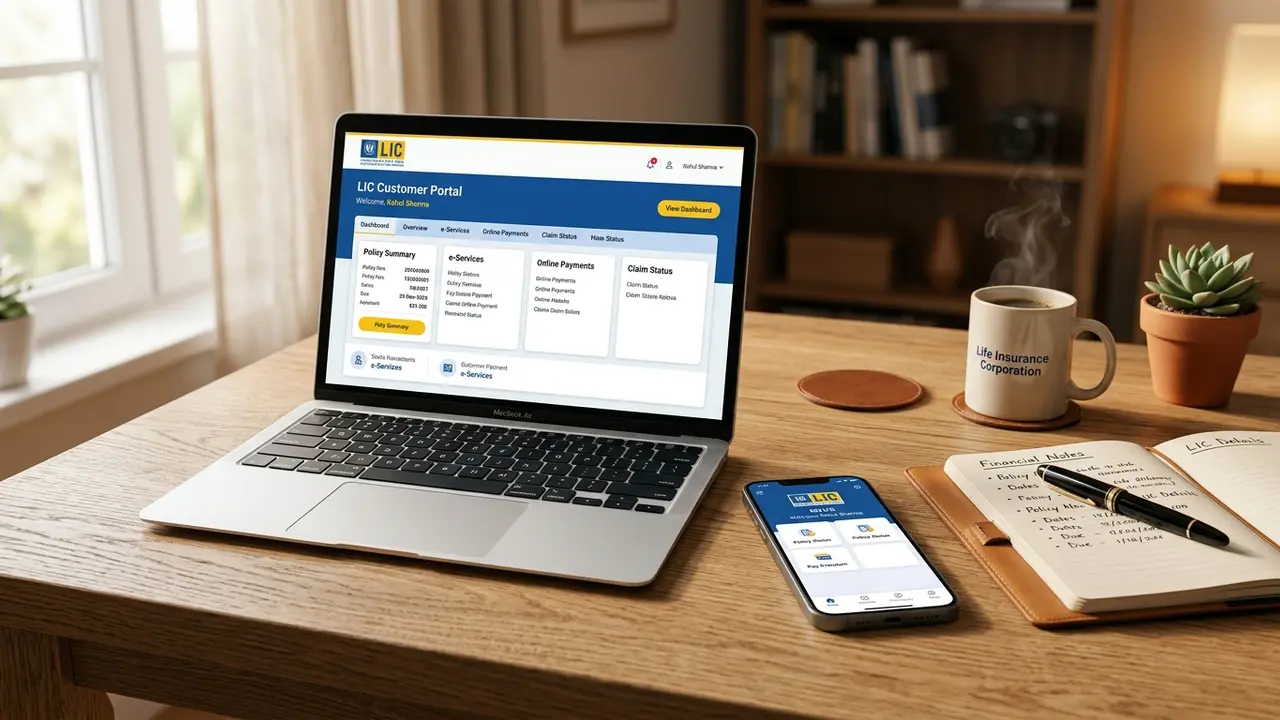
- Obtain a Written Revival Quotation: Visit the cash/accounts counter of your servicing branch or download the quotation from the LIC Customer Portal, showing exact arrears and interest.
- Complete Form 300 / 340 (DGH): Sign the Declaration of Good Health certifying continuous sound physical condition.
- Medical Examination (if required): If mandated based on your age and Sum at Risk, get examined by an authorized LIC medical examiner.
- Pay Dues: Remit the quotation amount via cheque, demand draft, debit card, or online UPI. Once approved, the branch issues a formal Revival Endorsement.