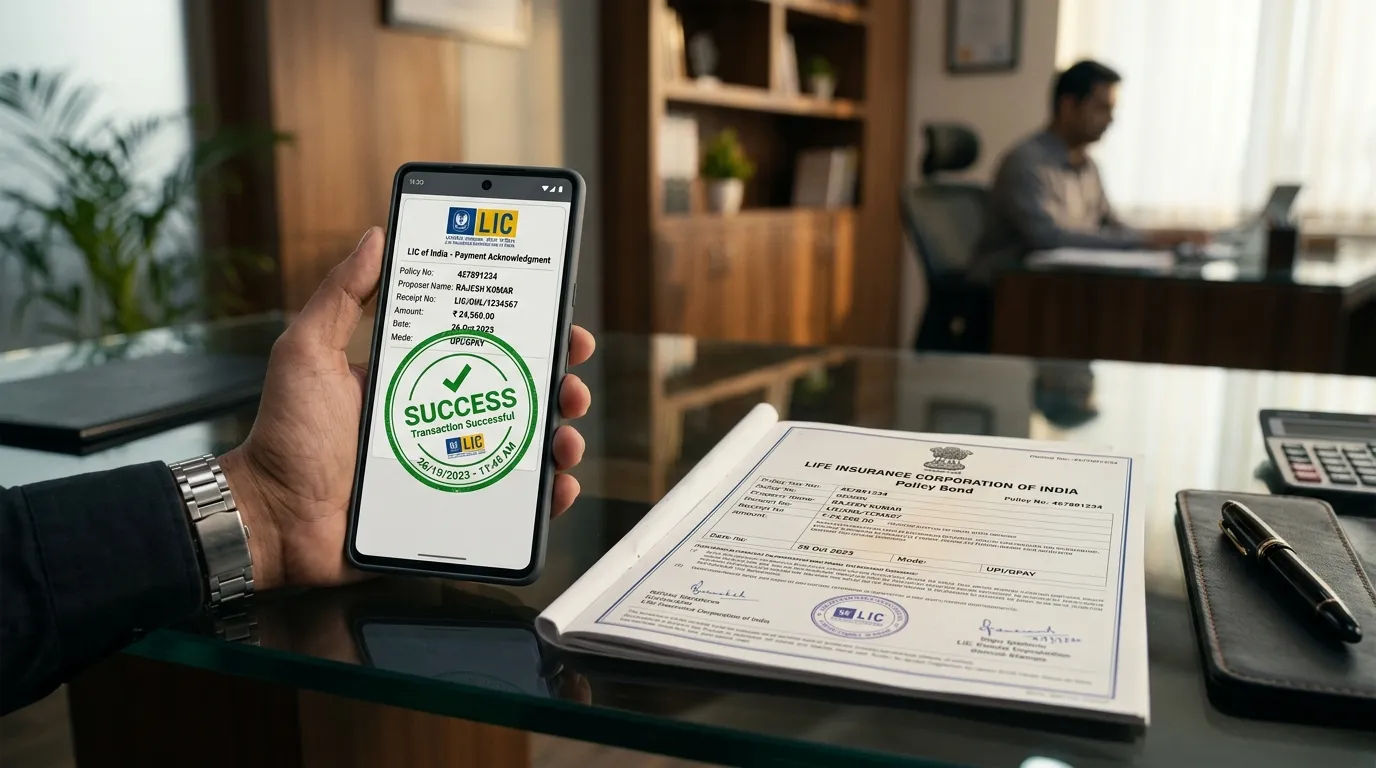
Life is unpredictable, and unexpected financial crunches or oversights frequently lead policyholders to miss premium payments. When the mandatory 30-day grace period lapses without remittance, your Life Insurance Corporation of India (LIC) policy officially enters "Lapsed" status. In an instant, the contractual death benefit is deactivated, future bonus accumulation is suspended, and financial vulnerability strikes your family.
Fortunately, the regulatory architecture created by the Insurance Regulatory and Development Authority of India (IRDAI) provides a generous statutory window to rescue your policy. Under current rules, you have up to 5 consecutive years from the First Unpaid Premium (FUP) date to revive your policy. This comprehensive, actuarially verified guide covers everything you need to know: the mathematical calculation of compound late fees, the 5 official revival schemes, line-by-line Form 680 compliance, special discount campaigns, and the exact online steps to reinstate your policy in 2026.
1. When Does an LIC Policy Officially Lapse? (Grace Period Rules)
A life insurance policy is a continuous contract conditioned upon timely payment of consideration (premium). To prevent accidental policy cancellation due to operational or banking delays, LIC provides a statutory Grace Period under its master policy provisions:
- Yearly, Half-Yearly, and Quarterly Premium Payment Modes: Exactly 30 calendar days of grace are granted from the designated premium due date. In months with 31 days, a full calendar month is allowed.
- Monthly Premium Payment Mode (NACH / ECS / Salary Savings Scheme - SSS): Exactly 15 calendar days of grace are provided due to higher payment frequency.
Death During Grace Period Exception: If the life assured passes away during the active 30-day grace period before paying the premium, the claim is treated as a fully valid death claim. LIC pays the entire Sum Assured along with all accrued bonuses, deducting only the single unpaid installment premium from the settlement cheque.
2. The 5-Year Revival Window: Legal & Regulatory Rules
Under the revised IRDAI (Non-Linked Insurance Products) Regulations, policyholders are granted a rehabilitation timeline of up to 5 consecutive years from the date of the First Unpaid Premium (FUP) to revive and reinstate their lapsed policy. Prior to this regulatory amendment, older policies were subject to a shorter 2-year window.
Reviving an existing lapsed policy is almost universally superior to purchasing a brand-new insurance policy for four decisive financial reasons:
3. How Late Fee Interest is Calculated (Formula & Rates)
To revive a lapsed policy, the policyholder must pay the accumulated total of all unpaid installment premiums along with compound late fee interest for the delay period.
The interest rate is determined by LIC's Actuarial Investment Committee and is benchmarked to prevailing 10-year Government of India benchmark bond yields. For the financial year 2025–2026, the standard late fee penalty is pegged at 9.50% per annum, compounded half-yearly.
Where:
• P_i = Individual installment premium overdue for period i.
• r = Annual interest rate (0.095 for 9.50% p.a.).
• t_i = Time duration in years elapsed since that specific installment due date.
• A statutory minimum late fee of ₹5 to ₹15 applies per transaction.
4. Special Revival Campaign & Late Fee Concession Slabs
To encourage policyholders to bring their lapsed policies back into active status, LIC launches nationwide Special Revival Campaigns twice a year (typically in February–March and August–October). During these limited campaign windows, LIC offers substantial discounts on accumulated compound late fee interest.
| Total Overdue Base Premium Range | Late Fee Concession % | Maximum Concession Ceiling | Eligibility Condition |
|---|---|---|---|
| Up to ₹1,00,000 | 30% Discount | ₹3,000 Maximum | Traditional Non-Linked Plans |
| ₹1,00,001 to ₹3,00,000 | 25% Discount | ₹3,500 Maximum | Traditional Non-Linked Plans |
| ₹3,00,001 and Above | 20% Discount | ₹4,000 Maximum | Traditional Non-Linked Plans |
| Micro Insurance Plans (e.g. Bhagya Lakshmi) | 100% Full Waiver | Zero Late Fee | Micro Insurance Portfolio |
Pro-Tip: If your policy has been in arrears for multiple years, timing your revival during an active Special Revival Campaign can easily save you between ₹3,000 and ₹4,000 in out-of-pocket penalties.
5. The 5 Official LIC Revival Schemes Explained
Depending on your current financial capacity, the duration of lapse, and your medical insurability, LIC provides five official procedural revival schemes:
5.1 Scheme 1: Ordinary Revival (Lapse Duration < 6 Months)
If you revive your policy within 6 months from the First Unpaid Premium (FUP) date, the process is streamlined and frictionless:
- Zero Health Declarations: No Declaration of Good Health (Form 680) is required.
- Zero Medical Examinations: No clinical checkups or physician reports are needed.
- Instant Processing: You simply calculate the overdue premium and late fee interest, pay online via UPI or Net Banking, and the policy is reinstated within hours.
5.2 Scheme 2: Revival on Non-Medical Basis (Under Form 680)
When a policy has been lapsed for more than 6 months, it can still be revived without clinical medical checkups provided it falls within LIC's Non-Medical Underwriting Limits:
- The life assured must be within eligible age limits (generally under 45 or 50 years of age).
- The total Sum at Risk (SAR) across all existing policies must not exceed non-medical thresholds (typically up to ₹25 Lakhs to ₹50 Lakhs for salaried professionals).
- The policyholder submits a signed Declaration of Good Health (Form 680) confirming good health.
5.3 Scheme 3: Revival on Medical Basis (Clinical Underwriting)
If the lapse duration exceeds 6 months and the Sum at Risk exceeds non-medical limits, or if the policyholder is above 45 years of age, medical underwriting is compulsory:
- The policyholder must undergo a physical medical examination by an authorized LIC Medical Examiner (Form 300 / 310).
- Depending on the age and Sum Assured, Special Medical Reports (SMR) may be ordered, including Fasting Blood Sugar, HbA1c, Resting ECG, Lipid Profile, and Routine Urine Analysis.
- If diagnostic results reveal newly developed health conditions (e.g., hypertension or diabetes), LIC's underwriting department may approve revival with an underwriting health loading (e.g., ₹2 to ₹5 extra per thousand Sum Assured).
5.4 Scheme 4: Special Revival Scheme (Shifting Commencement Date)
If a policyholder suffered severe financial hardship and accumulated 2 to 3 years of unpaid premiums, paying the entire backlog in a single lump sum might be impossible. Under the Special Revival Scheme:
- LIC shifts the Date of Commencement (DOC) of the policy forward in time by up to 2 years (or the exact period of lapse).
- The policyholder pays only one single installment premium at their current age.
- The policy maturity date is extended accordingly. All prior unpaid premiums are forgiven without requiring cash payment.
- Regulatory Restriction: This scheme is permitted only once throughout the entire lifetime of the policy contract.
5.5 Scheme 5: Loan-cum-Revival Scheme
If your policy had already completed at least 2 full years of continuous premium payments before it lapsed, it has acquired an intrinsic cash Surrender Value. Under this scheme:
- LIC calculates the maximum eligible policy loan (up to 90% of surrender value).
- The loan proceeds are directly used to pay off the accumulated unpaid premiums and late fee interest.
- If the loan value exceeds the total revival cost, the remaining cash surplus is transferred directly to your bank account via NEFT.
- The policy is fully restored to active status without requiring any out-of-pocket cash from you.
6. Comprehensive Case Study: Step-by-Step Revival Math
To understand how late fee interest and campaign discounts operate in practice, consider the case of Mr. Vikram Malhotra:
Mr. Vikram Malhotra: Policy Lapsed for 2.5 Years (5 Half-Yearly Installments)
Installment-by-Installment Compound Interest Math (9.50% p.a.)
| Installment Due Date | Overdue Months | Base Premium | Compound Interest | Total Payable |
|---|---|---|---|---|
| August 2023 (FUP) | 30 Months (2.5 yrs) | ₹18,500 | ₹4,810 | ₹23,310 |
| February 2024 | 24 Months (2.0 yrs) | ₹18,500 | ₹3,780 | ₹22,280 |
| August 2024 | 18 Months (1.5 yrs) | ₹18,500 | ₹2,775 | ₹21,275 |
| February 2025 | 12 Months (1.0 yr) | ₹18,500 | ₹1,800 | ₹20,300 |
| August 2025 | 6 Months (0.5 yr) | ₹18,500 | ₹880 | ₹19,380 |
| TOTAL OVERDUE | 5 Installments | ₹92,500 | ₹14,045 | ₹1,06,545 |
Impact of Special Revival Campaign Concession
Since Mr. Malhotra's total overdue base premium is ₹92,500 (under the ₹1,00,000 slab), he qualifies for a 30% discount on late fee interest (capped at ₹3,000):
By executing the revival during an active Special Revival Campaign, Mr. Malhotra saves ₹3,000 instantly while restoring ₹10,00,000 of comprehensive life insurance coverage.
7. Line-by-Line Guide to Form 680 (Declaration of Good Health)
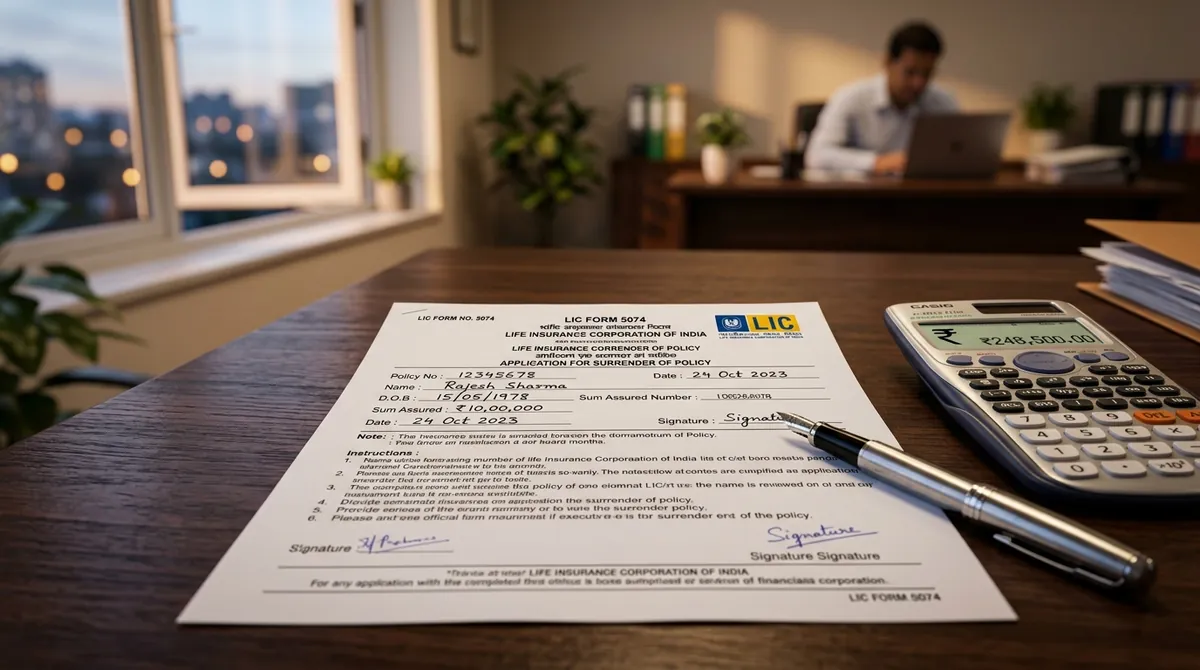
For any policy lapsed for more than 6 months, LIC Form No. 680 (Declaration of Good Health - DGH) is the mandatory legal instrument. Every statement in this document is governed by the principle of Uberrima Fides (Utmost Good Faith). Providing false statements can trigger claim repudiation under Section 45 of the Insurance Act 1938.
Enter the 9-digit Policy Number, Full Name of the Life Assured (matching the policy bond), current residential address, verified mobile phone number, email ID, and permanent account number (PAN).
You must answer each question individually with a clear "Yes" or "No":
- Have you suffered from any illness or disease requiring hospitalization or continuous medical treatment for more than 7 days since the proposal date?
- Have you undergone any surgical operation, ultrasound, CT scan, MRI, or specialized medical investigations?
- Have you been diagnosed with hypertension (high BP), diabetes, heart condition, cancer, kidney ailment, or respiratory disease?
- Are you currently taking any prescription medication for chronic health conditions?
Declare your current occupation and state whether you have been hospitalized for acute COVID-19 infection, respiratory distress, or received intensive care treatment during the lapse interval.
The policyholder must sign matching the specimen signature recorded in the original policy docket. Crucially, the signature must be attested by an authorized witness (licensed LIC Agent, Development Officer, Branch Manager, or Nationalized Bank Officer) with their official designation code and stamp.
8. Step-by-Step Online Revival via Customer Portal & Pay Direct
Policyholders whose policies qualify for Ordinary Revival (within 6 months of lapse) or Non-Medical Revival can complete the entire process paperlessly online:
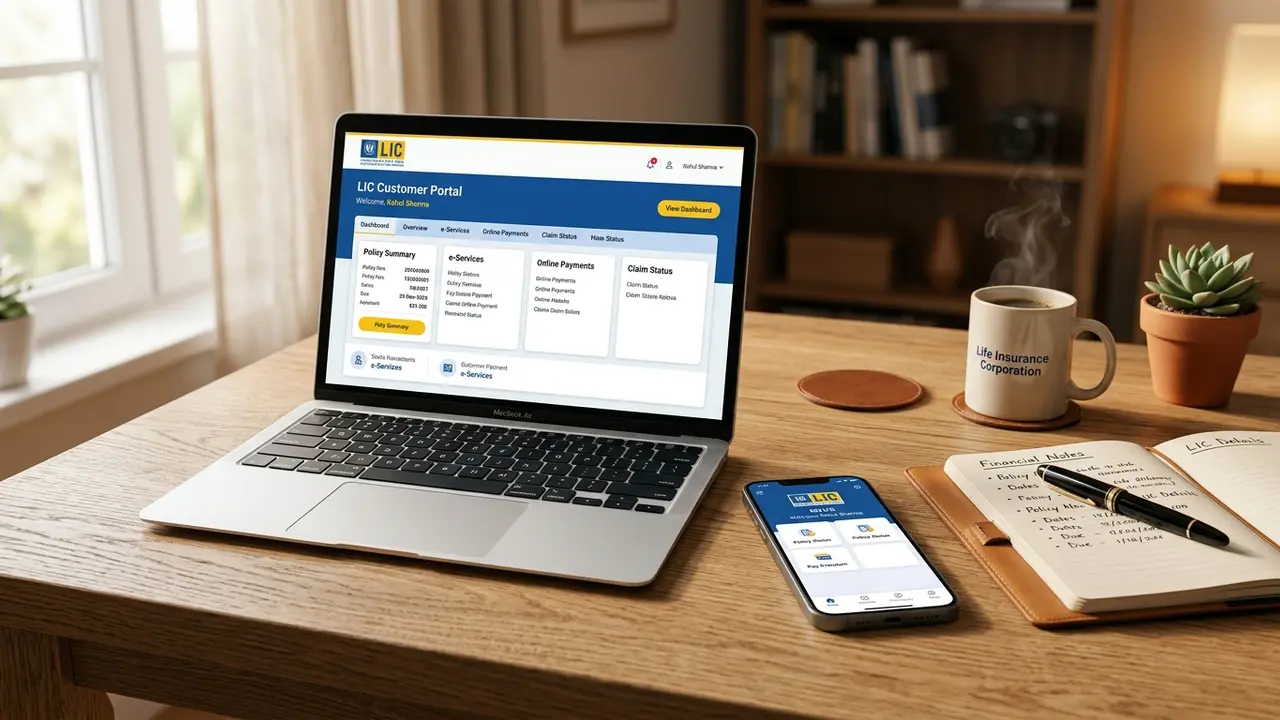
Log in to LIC Customer Portal or MyLIC App
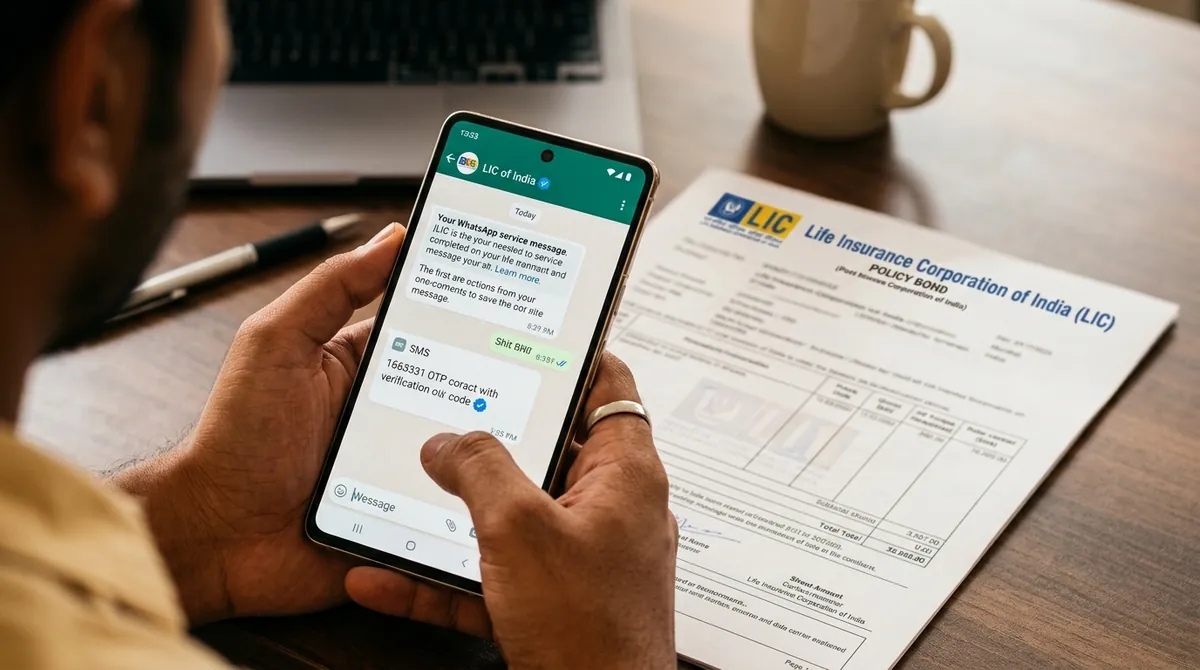
Visit ebiz.licindia.in/b2c or open the official MyLIC Customer App. Enter your credentials (User ID / Email / Mobile and Password) and complete SMS OTP two-factor verification.
Generate Policy Revival Quotation
From the service dashboard, navigate to Online Services → Service Requests → Policy Revival Quotation. Select your lapsed policy number from the list of enrolled contracts. The system instantly generates an itemized quotation showing overdue base premiums, accrued compound late fees, and applicable campaign discounts.
Complete Digital DGH Form 680 (If Prompted)
If the policy has been lapsed for more than 6 months, an electronic Form 680 questionnaire will display on screen. Answer the health declarations truthfully, review the preview, and authenticate using your Aadhaar-linked OTP for digital e-signing.
Make Online Payment via UPI / Net Banking
Select your preferred payment mode: UPI (GPay, PhonePe, Paytm, BHIM), Net Banking, or Credit/Debit Card. Complete the transaction securely on the payment gateway.
Download Revival Endorsement Receipt
Upon successful payment confirmation, download the official digital Revival Receipt. The policy status will update in LIC's central master database from "Lapsed" to "In-Force" within 2 to 4 hours, fully restoring risk cover.
9. Critical Edge Cases: Death During Lapse, Riders & Medicals
Several complex scenarios arise during policy revival that policyholders and nominees must understand:
Scenario A: Death Occurs While Revival Application is Under Review
If a policyholder submits Form 680 and pays the revival quotation amount, but passes away before the LIC Branch Underwriting Authority formally approves and issues the revival endorsement, the policy is legally deemed NOT revived. Under insurance contract jurisprudence, the payment is treated as a conditional deposit. LIC will refund the entire deposited revival amount to the nominee, but will not pay the death Sum Assured.
Scenario B: Reinstatement of Optional Riders
If your base policy included optional riders such as the Accidental Death & Disability Benefit Rider (ADDB) or Critical Illness Benefit Rider (CIR), reviving after a prolonged lapse of more than 12 months requires specific rider underwriting approval. In certain cases, LIC may agree to revive the base life cover while terminating the health/critical illness rider if medical reports reveal elevated health risks.
Scenario C: Section 45 Restart on Revived Policies
Under the amended Section 45 of the Insurance Act 1938, when a lapsed policy is formally revived on the basis of a fresh Declaration of Good Health or medical report, the 3-year incontestability clock resets from the Date of Revival exclusively with respect to fraudulent non-disclosure made in the revival papers. Ensure complete medical honesty to keep your policy 100% claim-proof.
Content validated against IRDAI (Non-Linked Insurance Products) Regulations, Section 45 of Insurance Act 1938, and Life Insurance Corporation of India Master Policy Servicing Circulars (2025-2026).