Complete Guide to LIC Policy Loans: Eligibility, Compounding & Settlement (2026)
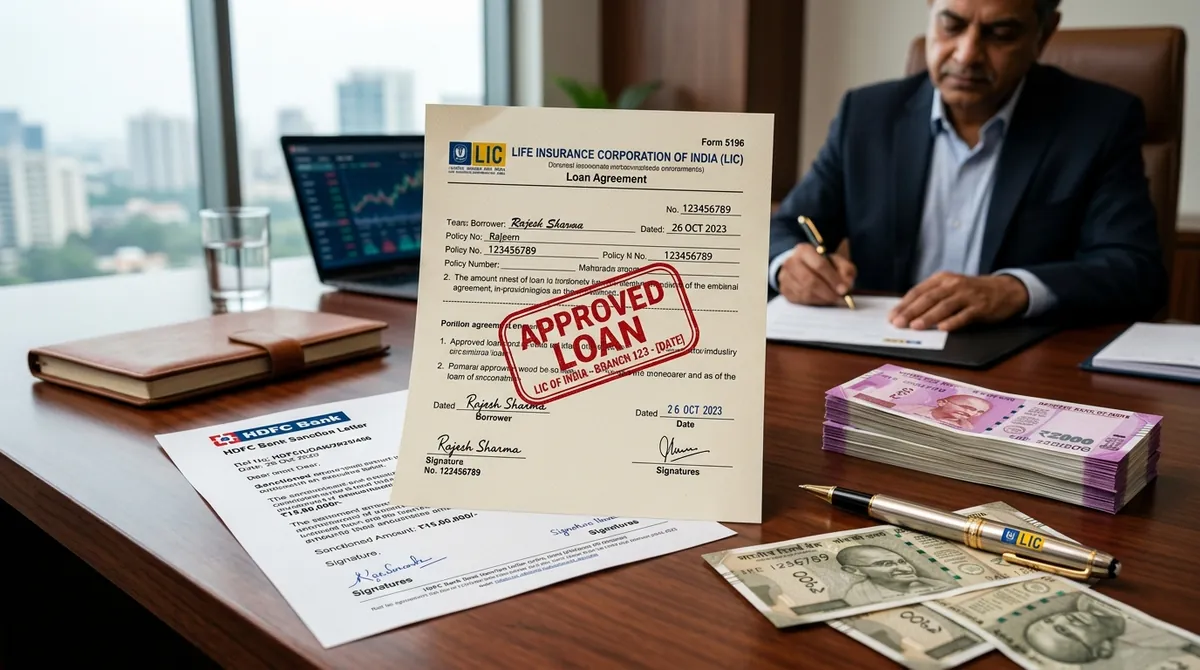
An LIC Policy Loan is an instantaneous, non-purpose credit facility extended by the Life Insurance Corporation of India against the accumulated cash surrender value of an active traditional life insurance policy. By using your own insurance policy equity as sole collateral, you bypass income documentation, bank statements, and CIBIL credit checks while retaining 100% of your life insurance protection.
Lending LTV Slabs: Policy Standing Rules
The statutory loan entitlement is computed strictly as a percentage of the policy's Special Surrender Value (SSV), governed by whether premiums are currently being paid:
| Policy Standing Status | Maximum Loan Cap (LTV) | Actuarial Conditions & Coverage |
|---|---|---|
| In-Force Policy (Active Premiums) | 90% of Special Surrender Value | Full original Sum Assured death cover remains active; modal rebates and vested bonuses continue accumulating. |
| Paid-Up Policy (Discontinued Premiums) | 80% of Special Surrender Value | Cover reduced to proportionate Paid-Up Sum Assured; future premiums are waived; loan cap restricted to 80%. |
| Lapsed Policy (Under 2 Years Paid) | 0% (Ineligible) | Policies with fewer than 2 full consecutive years of premiums paid acquire no guaranteed cash surrender value. |
9.5% p.a. Half-Yearly Compounding Interest Mechanics
Unlike bank loans that require fixed monthly EMIs, LIC policy loans operate on an interest-only servicing schedule. The annual interest rate is pegged at 9.50% per annum, compounded semi-annually on the exact dates fixed by the servicing LIC branch.
Flexible Principal Repayment
There is NO mandatory repayment schedule for the loan principal. You may choose to repay ₹10,000, ₹50,000, or the full principal in partial payments whenever surplus liquidity becomes available. There are zero prepayment charges or foreclosure penalties.
Foreclosure Threshold Warning
If the 6-monthly interest charge is deferred, it gets added directly to the principal balance and compounds. If total debt (sanctioned principal + accrued compound interest) ever exceeds the policy's cash surrender value, LIC issues a 30-day notice before foreclosing the policy.
Tax Benefits & Final Claim Settlement Mechanics
A major advantage of an LIC policy loan is the automatic claim adjustment mechanism:
- Maturity Settlement: If the principal remains unpaid at the date of maturity, LIC simply computes the total outstanding balance (principal + any unpaid interest) and subtracts it from the maturity payout (Sum Assured + Vested Bonuses + FAB). The net balance is paid tax-free under Section 10(10D).
- Death Claim Settlement: If the life assured passes away while the policy loan is active, the nominee receives the full Sum Assured on Death plus accrued bonuses, minus the outstanding loan amount. The nominee is never personally liable for loan repayment.
- Zero CIBIL Risk: LIC does not report policy loans to credit bureaus. Defaulting on a policy loan results only in forfeiture of policy equity, never in a degraded credit score or recovery agent harassment.
Frequently Asked Questions (FAQ)
What percentage of surrender value can I borrow from an LIC policy?
For active, in-force policies where all due premiums are paid up to date, you can borrow up to 90% of the Special Surrender Value. For fully paid-up policies where future premiums have ceased, the borrowing ceiling is capped at 80% of the Special Surrender Value. The minimum sanctioned loan amount is ₹1,000.
What is the interest rate on LIC policy loans and how is it charged?
LIC currently charges 9.50% per annum on policy loans, compounded half-yearly. Crucially, there is no mandatory monthly EMI schedule. Borrowers only need to service the accrued interest every 6 months. The principal can be repaid anytime in parts or allowed to be deducted from final maturity or death claim proceeds.
How many years of premium payments are required before availing a policy loan?
Under IRDAI regulations, traditional endowment and whole life plans must have completed at least 2 full consecutive years of regular premium payments to acquire a guaranteed surrender value. Once this 2-year threshold is crossed, the policyholder becomes legally eligible for a policy loan.
What happens if I never repay the principal on an LIC policy loan?
As long as you service the half-yearly interest, you are under no obligation to repay the principal during the policy term. At maturity or in the event of an unforeseen death claim, LIC simply settles the total outstanding principal from the claim proceeds and disburses the net balance to you or your nominee.
What triggers policy foreclosure on an LIC loan?
If a borrower neglects to pay the half-yearly interest, the unpaid interest compounds and gets capitalized into the loan principal. If total debt (principal + unpaid compound interest) equals or exceeds the accumulated surrender value, LIC issues a cure notice. If unpaid, the policy is foreclosed and terminated, extinguishing all life cover.