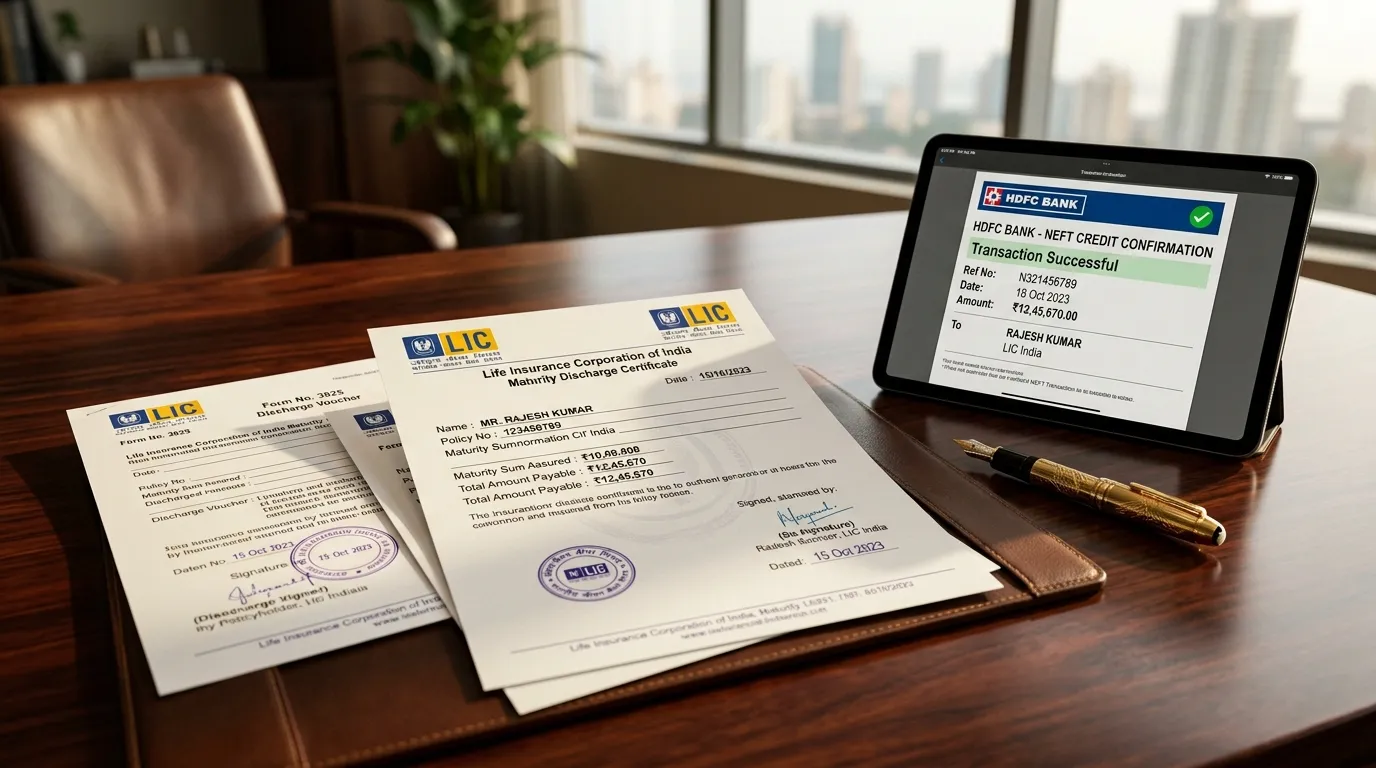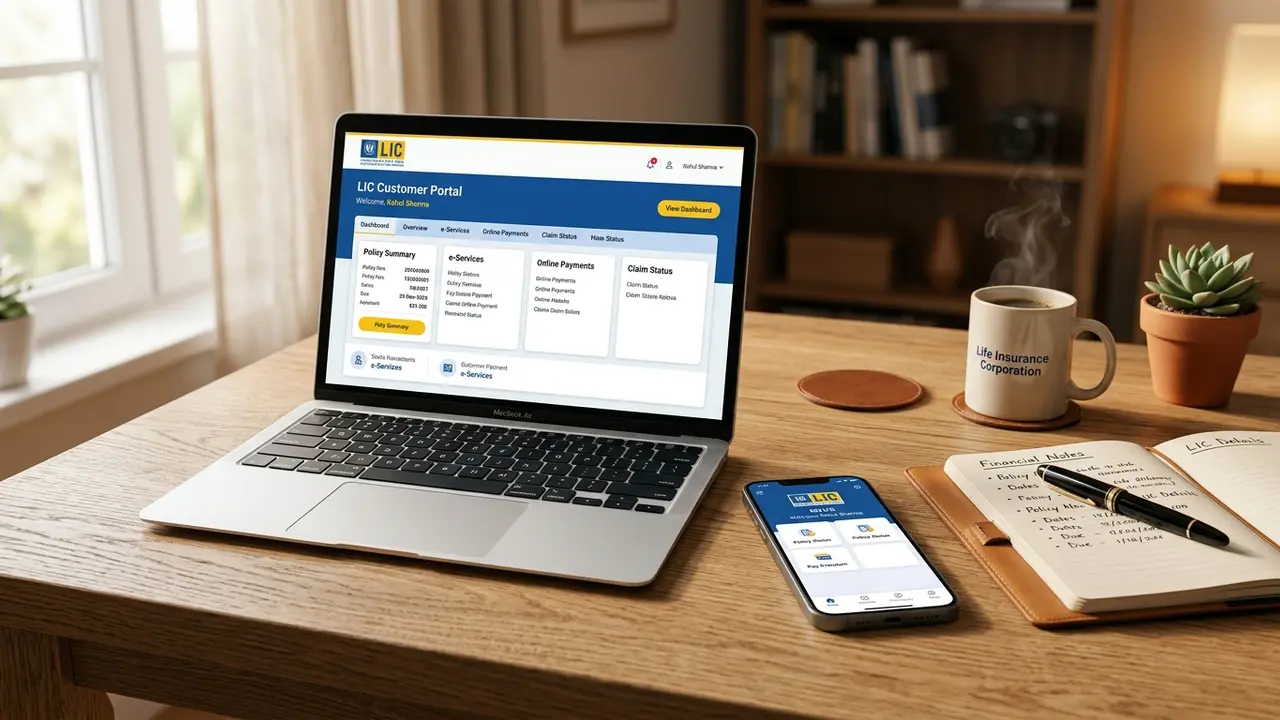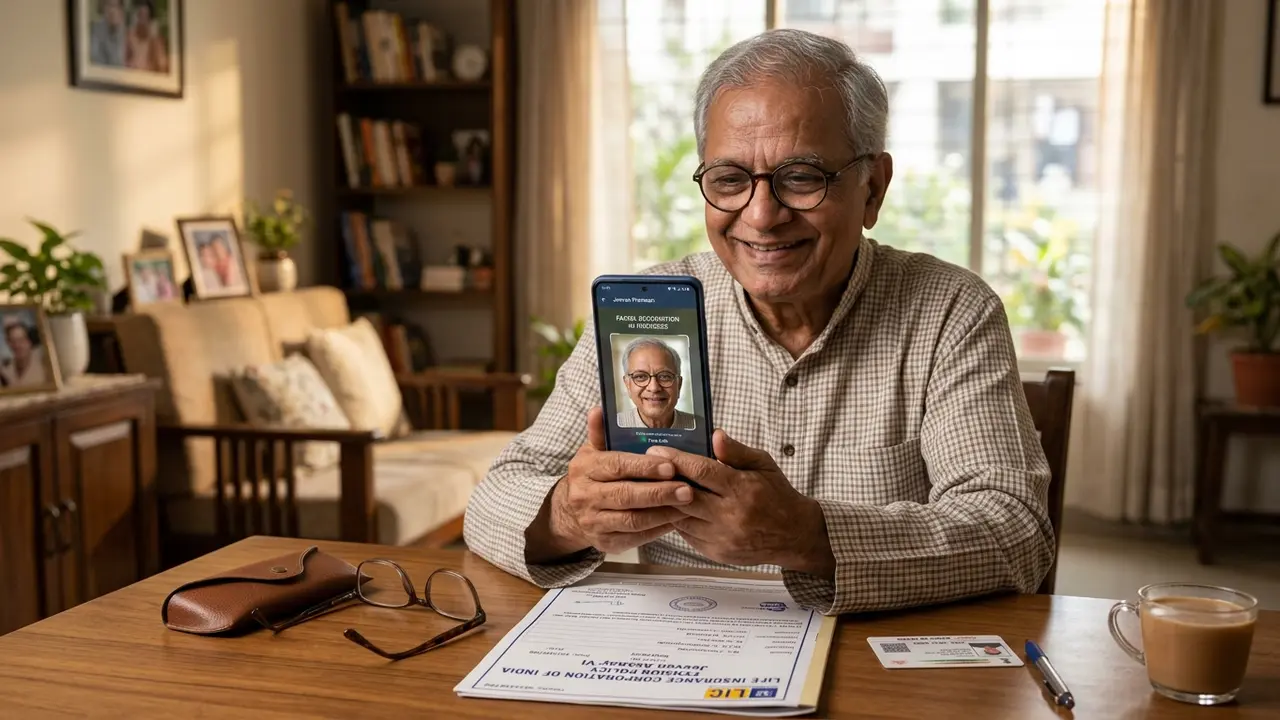
In India's rapidly modernizing financial ecosystem, the integration of regulatory oversight, taxation transparency, and insurance administration has culminated in a strict mandate: linking your Permanent Account Number (PAN) and Aadhaar with all Life Insurance Corporation of India (LIC) policies. Under the Central Board of Direct Taxes (CBDT) notifications and Insurance Regulatory and Development Authority of India (IRDAI) guidelines, policy servicing is no longer an isolated transactional process. Today, an inoperative or unlinked PAN directly threatens your financial returns, turning hard-earned maturity payouts, surrender values, and pension annuities into targets for punitive taxation.
Many policyholders mistakenly view PAN-Aadhaar linking as a routine administrative formality that can be deferred until claim settlement. This misconception carries devastating consequences. Under Section 206AA of the Income Tax Act, 1961, any taxable payout from an insurance policy where PAN is missing or legally "inoperative" attracts an immediate, flat 20% penal Tax Deducted at Source (TDS)—four times the standard 5% rate under Section 194DA. Furthermore, an unlinked PAN prevents LIC's Core Insurance Solutions (CIS) software from transferring tax credits to your Form 26AS and Annual Information Statement (AIS), triggering automated tax demand notices and indefinite liquidity freezes.
This definitive, actuarially verified operational manual covers the complete technical roadmap for linking your PAN and Aadhaar with your LIC policies in 2026. Whether utilizing LIC's public online utility (without login), executing portfolio-wide synchronizations through the Customer Portal and MyLIC Mobile App, or navigating demographic mismatches via Form No. 5152 at your home branch, this guide delivers authoritative, step-by-step instructions designed to safeguard your insurance investments.
1. Statutory Mandate: Section 206AA & Section 139AA Enforcement
The statutory requirement to link PAN and Aadhaar with financial contracts originates from the legislative framework of the Income Tax Act, 1961, bolstered by regulatory directives issued under the Prevention of Money Laundering Act (PMLA), 2002. Understanding these legal mechanisms explains why the Corporation enforces algorithmic KYC compliance across all active policies:
Section 139AA mandates that every individual allotted a PAN who is eligible to obtain Aadhaar must link the two identifiers. Under Rule 114AAA of the Income Tax Rules, 1962, read with CBDT Circular No. 03/2023, any PAN that remains unlinked with Aadhaar beyond the prescribed statutory deadline is classified as legally "inoperative". By operation of law, an inoperative PAN is deemed as if the individual has not furnished or quoted their PAN at all.
Under the IRDAI (Anti-Money Laundering and Counter-Financing of Terrorism) Master Guidelines, life insurance companies are categorized as "Reporting Entities". Insurers are legally compelled to perform rigorous Customer Due Diligence (CDD) and maintain verified Aadhaar and PAN records for all policies where annual premiums exceed ₹50,000, aggregate payouts exceed ₹1,00,000, or where cash transactions occur.
Statutory Text: Section 206AA(1) of the Income Tax Act, 1961
"Notwithstanding anything contained in any other provisions of this Act, any person entitled to receive any sum or income or amount, on which tax is deductible under Chapter XVII-B shall furnish his Permanent Account Number to the person responsible for deducting such tax, failing which tax shall be deducted at the higher of the following rates, namely:—
(i) at the rate specified in the relevant provision of this Act; or
(ii) at the rate or rates in force; or
(iii) at the rate of twenty per cent (20%)."
Because Rule 114AAA treats an inoperative PAN as "not furnished", Section 206AA automatically supersedes the standard 5% deduction under Section 194DA. LIC's automated disbursements system cannot override this statutory requirement; it is programmed to enforce the 20% deduction algorithmically.
The constitutional validity of linking Aadhaar with PAN was definitively established by the Supreme Court of India in Justice K.S. Puttaswamy (Retd.) v. Union of India (2019 1 SCC 1) and Binoy Viswam v. Union of India (2017 7 SCC 59). The apex court ruled that the Section 139AA mandate is a proportionate measure enacted to eliminate duplicate PAN cards, curb money laundering, and prevent systemic tax evasion across insurance and banking institutions.
2. Severe Consequences of Inoperative PAN: 20% TDS vs 5% Under 194DA
To grasp the severe financial damage caused by an inoperative or missing PAN, policyholders must understand the mechanics of life insurance taxation in India. While death benefit proceeds are 100% exempt from tax under Section 10(10D) under all circumstances, maturity proceeds, surrender disbursements, and survival benefits are taxable if they fall outside Section 10(10D) exemptions:
- • Non-Exempt Traditional Policies: Policies issued after April 1, 2012, where the annual premium exceeds 10% of the Basic Sum Assured (or 20% for policies issued between April 1, 2003, and March 31, 2012).
- • High-Premium Traditional Policies (Finance Act 2023): Traditional non-linked life insurance policies issued on or after April 1, 2023, where the aggregate annual premium across all policies held by the individual exceeds ₹5,00,000 in any financial year.
- • High-Premium ULIPs (Finance Act 2021): Unit Linked Insurance Plans issued on or after February 1, 2021, where the aggregate annual premium exceeds ₹2,50,000.
- • Keyman Insurance & Pension Annuities: Payouts under Keyman policies and immediate/deferred annuity installments (e.g., Jeevan Akshay, New Jeevan Shanti).
2.1 The Section 194DA Standard vs Section 206AA Penal Withholding
Under Section 194DA, when a life insurance payout is non-exempt and the net taxable income component (gross proceeds minus total premiums paid) exceeds ₹1,00,000 in a financial year, LIC is statutorily mandated to deduct TDS at 5% on the net income component. However, if your PAN is unlinked or inoperative, Section 206AA overrides this framework:
| Compliance Feature | Operative PAN Linked (Compliant) | Inoperative / Unlinked PAN (Non-Compliant) |
|---|---|---|
| Statutory TDS Rate | 5% under Section 194DA | Flat 20% under Section 206AA |
| Tax Base Calculation | Net Income (Gross Payout minus Total Premiums Paid) | 20% on Net Income (or Gross Payout in system mismatch) |
| Form 26AS Reflection | Immediate credit visible on TRACES portal | ZERO credit reflected (Rejected by ITD backend) |
| Annual Information Statement (AIS) | Accurately mapped under Category 194DA | Flagged with mismatch error; triggers scrutiny notice |
| ITR Refund Eligibility | Fully refundable or adjustable against tax liability | Blocked until PAN is re-activated (₹1,000 late fee paid) |
| Claim Settlement Speed | Instant NEFT credit within 3 to 7 working days | Claim placed on administrative hold pending KYC clearance |
2.2 The Trap of Form 26AS Mismatch and Frozen Tax Credits
When LIC deducts tax at source, it files a quarterly return (Form 26Q) with the Income Tax Department's TRACES platform. If your PAN is inoperative, the central processing system rejects the TDS voucher. This creates an administrative trap:
- 1. No Credit in Form 26AS: Although LIC has withheld 20% of your payout, the money does not appear in your Form 26AS tax credit ledger.
- 2. Inability to File Clean ITR: When you file your annual Income Tax Return (ITR), the e-filing portal automatically cross-references Schedule TDS with Form 26AS. Because the credit is missing, the system disallows your tax credit claim.
- 3. Demand Notices Under Section 143(1): The Central Processing Centre (CPC) in Bengaluru issues a tax demand notice under Section 143(1)(a) demanding the tax amount plus penal interest under Section 234B and Section 234C.
Numerical Case Study: Maturity Settlement Under Section 194DA vs Section 206AA
Actuarial ComparisonConsider Shri Rajeshwar Sen (Age 45), who subscribed to an LIC high-premium non-linked endowment policy on April 15, 2023. The policy parameters and maturity figures are as follows:
5 × ₹6,00,000 = ₹30,00,000
Net Taxable Income = Gross Maturity Payout - Aggregate Premiums PaidNet Taxable Income = ₹42,50,000 - ₹30,00,000 = ₹12,50,000TDS deducted under Section 194DA @ 5% on net income:
5% of ₹12,50,000 = ₹62,500₹42,50,000 - ₹62,500 = ₹41,87,500Penal TDS deducted under Section 206AA @ 20% on net income:
20% of ₹12,50,000 = ₹2,50,000₹42,50,000 - ₹2,50,000 = ₹40,00,0003. Pre-Requisites Checklist: Active PAN, Aadhaar OTP & Policy Records
Before initiating the linking process online, policyholders must ensure all digital pre-requisites are verified to prevent technical aborts and backend validation rejections:
Operative PAN Status on Income Tax e-Filing Portal
Verify that your PAN is operative by visiting the Income Tax e-Filing portal (incometax.gov.in) and checking the "Link Aadhaar Status" tool. If your PAN is inoperative, you must first pay the ₹1,000 statutory fee under Section 234H, link PAN with Aadhaar on the e-filing portal, and wait 48 to 72 hours for status reactivation before linking with LIC.
Aadhaar-Linked Active Mobile Number for UIDAI OTP
The online authentication protocol dispatches a 6-digit One-Time Password (OTP) generated by the Unique Identification Authority of India (UIDAI). Ensure the mobile number registered with your Aadhaar card is active, capable of receiving SMS messages, and not placed under National Do Not Disturb (DND) blocking for service SMS.
Consolidated Portfolio of All LIC Policy Numbers
Compile a complete list of all 9-digit LIC policy numbers registered in your name across all branch offices in India. This includes traditional endowment plans, money-back plans, whole life policies, term insurance, pension annuities, and child policies where you are the proposer/policyholder.
Exact Demographic Alignment Across Documents
Verify that your Full Name (including middle names and initials), Date of Birth (DOB), and Gender match identically across your PAN card, Aadhaar card, and physical LIC policy bonds. A discrepancy as minor as an abbreviated surname or differing birth year will trigger an automated validation failure.
Active Email Address for Digital Acknowledgment
A working personal email address is required to receive the official registration acknowledgment receipt containing your unique Service Request Number (SRN) and timestamped audit log.
4. Step-by-Step Online Linking on LIC Portal (Without Login)
Life Insurance Corporation of India provides a direct, publicly accessible online utility that enables policyholders to link their PAN and Aadhaar without registering or logging into the Customer Portal. Follow this verified step-by-step walkthrough:
Navigate to the Official Online PAN Registration Gateway
Open your web browser and navigate to LIC's official website: https://licindia.in. Scroll to the "Customer Services" section on the home page and click on the banner titled "Online PAN Registration", or directly access the secured portal endpoint at: https://ebiz.licindia.in/D2CPM/#panAadhar.
Enter Demographic Data Exactly as per PAN & Aadhaar
You will be presented with the "Registration of PAN with LIC of India" web form. Complete the following mandatory fields with exact precision:
- • Date of Birth (DOB): Select your birth date in DD/MM/YYYY format exactly as printed on your PAN card.
- • Gender: Select Male, Female, or Transgender matching your Aadhaar records.
- • Email ID: Enter an active personal email address.
- • PAN: Type your 10-character alphanumeric PAN in CAPITAL letters (e.g.,
ABCDE1234F). - • Full Name as per PAN: Enter your full name precisely as recorded in the Income Tax database.
- • Mobile Number: Enter the active mobile number registered with your Aadhaar card.
Input Single or Multiple Policy Numbers
Enter your 9-digit LIC policy number in the "Policy Number" input box. If you hold multiple policies, click the "+ Add Policy Number" button. The portal dynamically appends additional input rows, allowing you to register up to 10 or more policies under the same PAN in a single session.
Execute UIDAI Consent Declaration & Captcha
Read the statutory consent declaration stating: "I hereby give my consent to LIC of India to use my Aadhaar number and PAN for authentication and KYC purposes under the Aadhaar Act, 2016 and PMLA Rules." Check the authorization box, enter the dynamic alphanumeric Captcha verification code, and click "Get OTP".
Authenticate via Aadhaar OTP & Submit
A 6-digit OTP will be dispatched to your Aadhaar-linked mobile number from the sender ID AADHAAR or LICIND. Enter the OTP in the verification box within the 180-second countdown window and click "Submit".
Save Digital Acknowledgment Receipt
Upon successful submission, the system generates an immediate electronic acknowledgment screen displaying your Request ID, submission timestamp, and the registered policy numbers. Click "Print / Save as PDF" to retain this receipt for your records. The request is routed to LIC's backend verification cell for automated cross-referencing with the NSDL/UTIITSL tax database.
5. How to Check PAN-Policy Linking Verification Status Online
Submitting your details online registers your linking request, but the policy records are only updated after successful automated cross-verification between LIC's Central Database and the Income Tax Department (ITD). Policyholders can track their verification status in real time:
Navigate directly to LIC's PAN status verification portal: https://ebiz.licindia.in/D2CPM/#panStatus. Alternatively, visit licindia.in, open the "Online PAN Registration" menu, and select "Check Status of PAN Registration".
5.1 Information Required to Query Linking Status
To query the database, input the following three parameters:
- • Policy Number: The specific 9-digit policy number you wish to verify.
- • Date of Birth (DOB): Policyholder's date of birth in DD/MM/YYYY format.
- • PAN Number: The 10-character alphanumeric PAN registered with the policy.
- • Security Captcha: Case-sensitive image verification code.
5.2 Interpreting the Four System Status Responses
Message: "Your PAN is successfully linked and verified with Policy Number XXXXXXXXX."
Implication: Full tax compliance established. TDS under Section 194DA will be deducted at 5% (if applicable), and credits will reflect in Form 26AS.
Message: "PAN details captured successfully. Awaiting batch verification with Income Tax Department."
Implication: Record submitted within the last 3 to 7 working days. LIC batches records weekly for ITD validation. No action required unless status persists over 10 days.
Message: "PAN verification failed. Demographic mismatch between LIC policy records and ITD database."
Implication: Name spelling or date of birth differs between documents. Automated online linking cannot proceed; policyholder must submit Form No. 5152 offline.
Message: "No PAN record found registered against the entered policy number."
Implication: The policy has never been linked with PAN. Immediate registration required through the online portal or home branch to avoid 20% Section 206AA TDS.
6. Linking via LIC Customer Portal (Premier Services) & MyLIC App
For registered users of the LIC Customer Portal, managing KYC compliance across an entire family portfolio is significantly more streamlined, particularly for those who have activated Premier Services:
6.1 Updating PAN via the Customer Portal Web Interface
Log in to Customer Portal
Visit ebiz.licindia.in/D2CPM/#login and sign in using your User ID (or Mobile Number / Email), Password, and Date of Birth.
Navigate to Service Requests
On the left navigation dashboard, click on "Service Requests" and select "PAN Registration / Updation" from the drop-down catalog.
Review Enrolled Policy KYC Matrix
The portal displays all enrolled policies alongside their current KYC status (e.g., "PAN Verified", "Aadhaar Linked", or "KYC Pending"). Check the boxes next to all policies requiring PAN updates.
Single-Click Portfolio Synchronization
Enter your 10-digit PAN. If you are registered for Premier Services, the platform authenticates via your pre-verified credentials and synchronizes your PAN across all selected policies simultaneously without requiring repeated manual entries.
6.2 Linking PAN Using the MyLIC Mobile App (Android & iOS)
Policyholders preferring mobile self-service can utilize the official MyLIC App (published by Life Insurance Corporation of India):
MyLIC App Execution Protocol:
- • Step 1: Launch the MyLIC App and authenticate via 4-digit MPIN or Biometric (Fingerprint / Face ID).
- • Step 2: From the home dashboard, tap on "Quick Services" and select "Online PAN Registration".
- • Step 3: Enter your 9-digit Policy Number, PAN, Date of Birth, and registered Mobile Number.
- • Step 4: Tap "Submit" to trigger the Aadhaar OTP validation.
- • Step 5: Enter the OTP received via SMS. The app confirms registration instantly with a success dialogue box and updates your in-app policy dashboard status.
7. Offline Submission Procedure: Filling Form No. 5152 (KYC Updation)
While online linking handles over 85% of standard cases, offline branch submission remains indispensable for policyholders experiencing demographic mismatches, senior citizens lacking smartphone or Aadhaar-linked mobile access, minor policies transitioning to major status, and policies under legal dispute. The official instrument for offline KYC rectification is LIC Form No. 5152 (Policyholder KYC Updation / PAN Endorsement Form).
Form No. 5152 can be obtained free of charge from the Policy Servicing Counter of any computerized LIC branch across India, downloaded from the "Forms" repository on licindia.in, or requested from your servicing LIC Development Officer.
7.1 Line-by-Line Guide to Filling Form No. 5152
Section I: Policy & Branch Identification
HeaderEnter the 3-digit or 4-digit Branch Code and Divisional Office name where the policy was originally underwritten (printed on your policy bond). List all 9-digit policy numbers for which KYC updation is requested.
Section II: Policyholder Identity & Demographic Particulars
Personal InfoWrite your Full Name in BLOCK LETTERS. If your name differs between the policy bond and PAN card, enter your name exactly as per PAN card in the primary box, and write the name as per policy bond in the "Former / Alternative Name" field. Enter Father's Name, Mother's Name, Gender, Marital Status, and Date of Birth.
Section III: Permanent Account Number (PAN) & Tax Status
TaxationEnter your 10-character PAN. Select your tax category: Individual, HUF, Body Corporate, or Non-Resident. If you do not possess a PAN and your income is below taxable limits, you must complete and attach Form 60 (as per Rule 114B of the Income Tax Rules).
Section IV: Aadhaar & Officially Valid Document (OVD) Details
Identification
Enter your 12-digit Aadhaar Number or 16-digit Virtual ID (VID). Under UIDAI privacy directives, policyholders should submit a Masked Aadhaar copy where only the last 4 digits are visible (e.g., XXXX-XXXX-1234). If submitting alternative OVDs, record document numbers for Passport, Voter ID, or Driving Licence.
Section V: Address Verification & Contact Information
CorrespondenceRecord your complete current correspondence address and permanent address with PIN code. Enter your active 10-digit mobile number and personal email address for automated SMS/email dispatch.
Section VI: Declaration, Signature & OSV Certification
Statutory ExecutionSign your full signature in blue or black ink matching the signature on your original policy proposal form. If executing via Left Thumb Impression (LTI), the impression must be witnessed and certified by an authorized Gazetted Officer, Bank Manager, or LIC official. The branch officer completes the Original Seen and Verified (OSV) section after examining physical original documents.
7.2 Mandatory Physical Document Enclosures Checklist
1. Duly Executed Form No. 5152
Completely filled in black/blue ink, signed by the policyholder, with a recent passport-sized photograph affixed.
2. Self-Attested Photocopy of PAN Card
Clear, legible photocopy of the physical PAN card with the policyholder's signature across the face of the document.
3. Self-Attested Masked Aadhaar Card
Downloaded e-Aadhaar or physical card photocopy with the first 8 digits redacted and QR code clearly legible.
4. Proof of Policy Ownership
Photocopy of the first page of the original Policy Bond or latest Renewal Premium Receipt (RPR) displaying policy particulars.
Submit the compiled packet at the Policy Servicing / Claims Counter of your nearest computerized LIC branch. Insist on an official rubber-stamped counterfoil acknowledgment bearing the Branch Inward Number, date, and receiving officer's signature. Under LIC's Citizen Charter, offline PAN endorsement takes 48 to 72 working hours to reflect in the central database.
8. NRI Policyholders: NRE/NRO, FATCA/CRS, Form 10F & TRC Protocol
Non-Resident Indians (NRIs) and Overseas Citizens of India (OCIs) holding rupee-denominated LIC policies operate under a distinct tax and regulatory regime. Cross-border insurance servicing introduces international tax compliance rules that policyholders must navigate:
8.1 The Threat of 30% Withholding Under Section 195
Unlike resident taxpayers who face 5% TDS under Section 194DA, payouts to non-residents fall under Section 195 of the Income Tax Act. When an NRI receives a taxable insurance payout (e.g. non-exempt maturity or surrender proceeds), Section 195 imposes a base withholding tax rate of 30% plus applicable surcharge and 4% Health and Education Cess, resulting in an effective tax deduction ranging between 31.2% and 35.88%!
NRIs residing in countries that have signed a Comprehensive Double Tax Avoidance Agreement (DTAA) with India (such as the USA, UK, UAE, Singapore, Canada, and Australia) can claim a concessional tax rate or complete tax exemption under Article 22/23 (Other Income). To invoke treaty relief and prevent 30% Section 195 withholding, the NRI policyholder must submit the "DTAA Compliance Quad" to LIC prior to claim disbursement.
8.2 The NRI Compliance Quad: Documents Required
Tax Residency Certificate (TRC)
An official certificate issued by the government revenue authority of the NRI's country of residence (e.g., IRS Form 6166 in the USA, Certificate of Residence from HMRC in the UK, or Tax Residency Certificate from the Federal Tax Authority in UAE) certifying tax residency for the relevant assessment year.
Electronic Form 10F
Under Rule 21AB of the Income Tax Rules, if the TRC does not contain all statutory particulars (such as nationality, tax identification number, and address), the NRI must electronically file Form 10F on the Income Tax e-Filing portal using their operative PAN and provide the generated PDF acknowledgment to LIC.
No-Permanent Establishment (No-PE) Declaration
A formal self-declaration confirming that the non-resident policyholder does not maintain a Permanent Establishment (PE) or fixed place of business in India through which insurance contracts are managed.
FATCA / CRS Self-Certification Form
Mandatory self-certification under the Foreign Account Tax Compliance Act (FATCA) and Common Reporting Standard (CRS). Discloses Country of Tax Residency, Taxpayer Identification Number (TIN / SSN), and overseas residential address.
8.3 Banking Mandate: NRE vs NRO Account Payouts
Under Reserve Bank of India (RBI) regulations and the Foreign Exchange Management Act (FEMA), insurance payouts to NRIs are governed by the funding source of the premiums:
- • Premiums Paid from NRE / FCNR Accounts: If premiums were remitted in convertible foreign currency or debited from a Non-Resident External (NRE) bank account, maturity proceeds are fully repatriable abroad. The payout is credited directly to the policyholder's NRE account upon submitting Form 15CA (online declaration) and Form 15CB (Chartered Accountant certification).
- • Premiums Paid from NRO / Indian Rupee Accounts: If premiums were paid from domestic Indian funds or a Non-Resident Ordinary (NRO) account, proceeds are non-repatriable and must be credited to an NRO account. Repatriation from NRO balances is restricted to the annual Liberalized Remittance Scheme (LRS) limit of USD 1,00,000 to USD 1,000,000 per financial year.
Yes. Under Section 139AA(3) of the Income Tax Act read with Ministry of Finance notifications, non-residents who do not qualify as "Residents" under the Aadhaar Act (having resided in India for 182 days or more in the preceding 12 months) are exempt from mandatory Aadhaar linking. However, NRIs must update their residential status to "Non-Resident" on the Income Tax e-filing portal. Failure to update this status may cause the automated ITD system to misclassify the PAN as resident and mark it "inoperative".
9. Troubleshooting Common Errors: Name, DOB & UIDAI OTP Glitches
When attempting to link PAN and Aadhaar online, policyholders frequently encounter technical rejection codes. Understanding the root causes of these errors enables swift resolution:
Error 1: "Name Mismatch Between Policy Bond and PAN Database"
High FrequencyRoot Cause: The automated validation API performs strict character-string matching. If your policy bond displays abbreviated initials (e.g., "R. K. Sharma") while your PAN card displays expanded names (e.g., "Rakesh Kumar Sharma"), or if a woman's surname changed post-marriage, the system throws a fatal validation error.
Error 2: "Date of Birth (DOB) Discrepancy"
Actuarial BlockRoot Cause: Older LIC policies frequently recorded estimated or arbitrary school-leaving certificate birth dates (e.g., 01/07/1975) that conflict with actual birth dates recorded on PAN and Aadhaar cards (e.g., 14/11/1975). Because life insurance premiums are actuarially linked to exact age at entry, the portal blocks any attempt to link a differing DOB.
Error 3: "UIDAI OTP Timeout / Expired Mobile Number"
Technical GlitchRoot Cause: The policyholder no longer operates the mobile number historically registered with UIDAI, or network congestion causes the 6-digit OTP to arrive after the 180-second session expiry window.
Error 4: "Policy Assigned to Bank / Lapsed Status"
Legal StatusRoot Cause: If a policy has been assigned under Absolute Assignment to a commercial bank or housing finance company (e.g., SBI, HDFC Bank) as loan collateral, the legal title vests in the assignee. Attempting to link the original policyholder's PAN online can trigger an administrative conflict flag.
10. Income Tax Filing & AIS/TIS Reconciliation: How LIC Reports to CBDT
Under the provisions of Section 285BA of the Income Tax Act, 1961, read with Rule 114E of the Income Tax Rules, Life Insurance Corporation of India is designated as a mandatory "Reporting Entity". Every financial transaction processed across LIC's nationwide network is systematically transmitted to the CBDT's Project Insight big-data analytical warehouse:
10.1 Statement of Financial Transactions (SFT) Reporting Triggers
LIC routinely reports the following transactional categories to tax authorities:
- • SFT-013 (Life Insurance Premium Payments): Aggregate annual cash premium payments exceeding ₹50,000, or cumulative premium payments across all policies exceeding ₹2,50,000 to ₹5,00,000 in a single financial year.
- • Form 26Q Quarterly Filings: All payouts involving TDS under Section 194DA, Section 194E, or Section 195, including maturity proceeds, surrenders, survival benefits, and agent commission disbursements.
- • Annual Information Statement (AIS) Integration: Gross payout amounts, taxable components, and TDS deductions are automatically populated under the "Life Insurance Policy Payouts" line item in the taxpayer's AIS and Taxpayer Information Summary (TIS).
10.2 Step-by-Step ITR Reconciliation & Schedule TDS-2 Mapping
When preparing your annual Income Tax Return (ITR-1, ITR-2, or ITR-3), reconciling LIC receipts ensures flawless assessment without scrutiny notices:
| ITR Schedule | Tax-Exempt Payouts (Sec 10(10D)) | Taxable Payouts (Non-Exempt / High Premium) |
|---|---|---|
| Schedule EI (Exempt Income) | Enter under "Section 10(10D) - Life Insurance proceeds" | Do not report in Schedule EI |
| Schedule OS (Other Sources) | Not applicable (Tax-Free) | Report Net Gain under "Any other income" with deduction for total premiums paid |
| Schedule TDS-2 | No TDS deducted (Zero entry) | Claim credit matching Form 16A using LIC's Divisional TAN |
| AIS Feedback Required? | Submit feedback if AIS erroneously classifies exempt sum as taxable | Verify that Gross and Net values match Form 16A certificates |
If your PAN was inoperative when LIC disbursed your maturity cheque and deducted 20% TDS, claiming this deduction in your ITR without an operative PAN will cause the CPC processing engine to declare your return "Defective" under Section 139(9). The system will disallow the tax credit, calculate tax payable on your gross income, and issue a demand notice with statutory interest. Linking PAN and ensuring operative status before filing ITR is paramount.
11. Frequently Asked Questions (8 Actuarially Validated Answers)
1. Why is it legally mandatory to link PAN and Aadhaar with an LIC policy?
Linking PAN and Aadhaar is required under Section 139AA of the Income Tax Act, 1961, and IRDAI Anti-Money Laundering (AML) Master Directions. It validates the policyholder's identity, prevents duplicate records, and ensures that statutory Tax Deducted at Source (TDS) under Section 194DA is accurately deducted at the standard 5% rate and credited to the taxpayer's Form 26AS.
2. What happens to my maturity or surrender payout if my PAN is inoperative under Rule 114AAA?
If your PAN is inoperative due to non-linkage with Aadhaar, Section 206AA mandates that LIC deduct penal TDS at a flat 20% on taxable payouts rather than the standard 5% under Section 194DA. Additionally, the deducted tax cannot be transferred to your Form 26AS on TRACES, blocking your tax refund and causing automated demand notices upon filing your ITR.
3. Can I link a single PAN card to multiple LIC policies across different branches?
Yes. LIC's public online linking portal allows policyholders to add multiple policy numbers in a single session by clicking the "+ Add Policy Number" button. Registered users on the LIC Customer Portal can update PAN across all enrolled self and family policies simultaneously with a single authentication step.
4. How can I verify online whether my PAN is successfully linked and verified with my LIC policy?
You can check linking status by visiting LIC's verification gateway at ebiz.licindia.in/D2CPM/#panStatus and entering your 9-digit policy number, date of birth, and PAN. The system displays a real-time status response confirming whether your PAN is verified and active, pending ITD validation, or rejected due to demographic mismatch.
5. What is the procedure if there is a name mismatch between my LIC policy bond and PAN card?
When an online linking attempt fails due to name discrepancies (e.g. initials vs expanded names or post-marriage changes), you must submit Form No. 5152 offline at your servicing branch. Attach self-attested copies of your PAN and Aadhaar along with a notarized "One and the Same Person" affidavit or marriage certificate to enable manual branch endorsement.
6. Will LIC deduct 20% TDS from death claim payouts if the deceased policyholder had an unlinked PAN?
No. Under Section 10(10D) of the Income Tax Act, 100% of death claim proceeds are completely exempt from income tax in the hands of the nominee, with zero TDS applicable under Section 194DA. Consequently, the Section 206AA penal rate does not apply to genuine death claim disbursements, although nominees must submit their own PAN for AML clearance.
7. What is LIC Form 5152 and when is offline branch submission required?
LIC Form No. 5152 is the official Policyholder KYC Updation and PAN Endorsement form. Offline submission is mandatory when online linking fails due to name or birth-date mismatches, for senior citizens without Aadhaar-linked mobile numbers, for policies transitioning from minor to major status, and for corporate/HUF policies.
8. Are Non-Resident Indians (NRIs) legally required to obtain and link an Aadhaar card with their LIC policies?
No. Under Section 139AA(3), NRIs who do not qualify as residents under the Aadhaar Act are exempt from mandatory Aadhaar linking. However, NRIs must update their residential status on the e-filing portal to keep their PAN operative, and must provide Form 10F and a Tax Residency Certificate (TRC) to avoid 30% TDS withholdings under Section 195.
Content validated against Section 139AA, Section 206AA, and Section 194DA of the Income Tax Act, 1961, Rule 114AAA of the Income Tax Rules, 1962, CBDT Circular No. 03/2023, IRDAI Master Guidelines on Anti-Money Laundering (AML/CFT), and Life Insurance Corporation of India Policy Servicing Operating Manuals (2025–2026).