LIC Personal Loan Eligibility & EMI Calculator
Evaluate your unsecured personal loan options. Determine maximum borrowing limit based on Net Monthly Income, current obligations, and CIBIL credit score tiers. Plan your reducing balance repayments with a complete monthly amortization schedule.
₹9,893
Applicable for a tenure of 3 years at 11.50% rate.
Your monthly EMI of ₹9,893 is 22.0% of your income, which is well within the healthy threshold of 45%.
| Year | Principal Paid | Interest Paid | Total Payments | Ending Balance |
|---|---|---|---|---|
| Year 1 | ₹88,797 | ₹29,916 | ₹1,18,714 | ₹2,11,203 |
| Year 2 | ₹99,565 | ₹19,149 | ₹1,18,714 | ₹1,11,638 |
| Year 3 | ₹1,11,638 | ₹7,076 | ₹1,18,714 | ₹0 |
LIC Personal Loans: Underwriting Rules, FOIR & CIBIL Tiers
Unsecured personal financing options associated with LIC group entities and institutional banking partners provide emergency liquidity for wedding expenses, medical treatments, consolidated credit card obligations, or home interior renovations. Because unsecured personal credit involves no tangible collateral pledge, institutional underwriters impose strict scrutiny on your Net Take-Home Salary, employment stability (minimum 2 years in service or 3 years in business), and historical repayment discipline cataloged in your CIBIL TransUnion Credit Report.
What is FOIR and How Does it Limit Borrowing Capacity?
The foundational metric governing loan sanction amounts is the Fixed Obligation to Income Ratio (FOIR). Institutional credit policies ensure that you do not overleverage your monthly earnings, reserving a protective cash buffer for household subsistence and statutory savings:
- Net Monthly Salary under ₹50,000: Maximum allowable FOIR is capped at 40% to 45%. If your net take-home pay is ₹40,000, your cumulative monthly EMI commitment (existing credit obligations + proposed personal loan EMI) cannot exceed ₹18,000.
- Net Monthly Salary above ₹50,000: Maximum allowable FOIR extends up to 50%, recognizing that borrowers with larger gross earnings retain greater discretionary cash flow after fundamental living expenses.
- Existing Debt Deductions: Car loans, home loan EMIs, two-wheeler finance, and 5% minimum due balances on active revolving credit cards are deducted from your gross debt servicing capacity prior to calculating your personal loan eligibility.
CIBIL Score Interest Rate Alignment & Risk Grading
Your CIBIL score is the definitive factor establishing the risk-adjusted markup added to the institution's base lending rate. High credit scores directly unlock tens of thousands of rupees in interest savings over a 3 to 5-year repayment window:
| CIBIL Score Range | Risk Classification | Indicative Interest Rate (p.a.) | Approval Likelihood |
|---|---|---|---|
| 750 & Above | Tier 1 (Prime / Excellent) | 10.25% - 10.75% | Immediate / Instant Processing |
| 700 - 749 | Tier 2 (Good Standing) | 11.25% - 12.00% | Standard Approval with Income Proof |
| 650 - 699 | Tier 3 (Average / Moderate) | 12.75% - 13.75% | Requires Co-Borrower or Extra Guarantees |
| Below 650 | Tier 4 (High Risk / Subprime) | 14.50% - 16.00%+ | High Rejection Rate / Strict Collateral Mandated |
Strategic Comparison: Personal Loan vs. LIC Policy Loan
Before committing to an unsecured personal loan with strict monthly EMI schedules and credit bureau tracking, policyholders should evaluate an LIC Loan Against Life Insurance Policy:
| Feature Parameter | Unsecured Personal Loan | LIC Policy Loan (Against Surrender Value) |
|---|---|---|
| Interest Rate Structure | 10.25% - 15.50% p.a. reducing balance | 9.50% p.a. compounding half-yearly |
| Monthly EMI Mandate | Mandatory fixed monthly reducing balance EMI | Zero mandatory EMI; interest due every 6 months |
| Processing Fees & GST | 1.00% to 2.50% of loan amount + 18% GST | ₹0 (Completely free of processing fees) |
| Credit Score Underwriting | Strict CIBIL scrutiny (750+ score required) | No CIBIL score verification needed |
| Repayment Flexibility | Tenure locked (1 to 5 years); penalties on fixed loans | Principal payable anytime or deducted at maturity |
Frequently Asked Questions (FAQs)
How is my maximum personal loan amount calculated?
Is a guarantor or co-applicant required for an LIC Personal Loan?
What documents are essential for personal loan processing?
Can I claim income tax deductions on personal loan EMI repayments?
Related LIC Loan & Repayment Calculators
Model collateral limits, calculate compounding loan interest, assess prepayment savings, or check HFL eligibility.
Related In-Depth Guides & Rules
Fact-checked actuarial procedures, official circulars, and line-by-line form guides for FY 2026-27
 Policy Loans & Finance
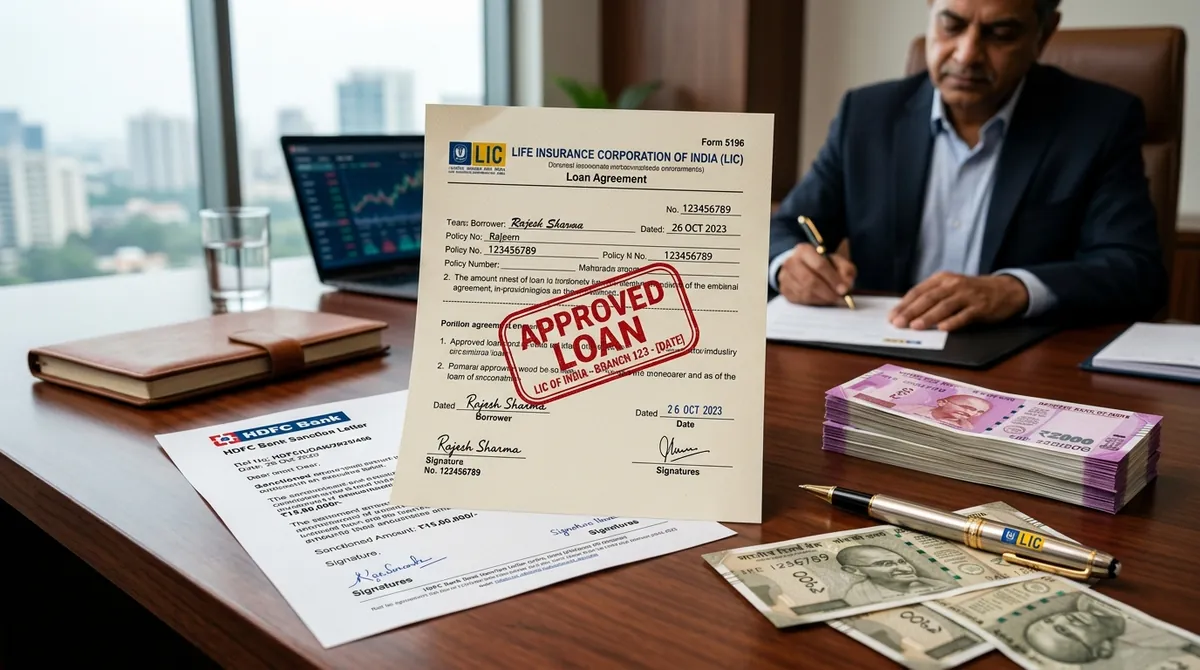
Loan Against LIC Policy: 2026 Rates, Eligibility & Form 5196 Guide
 Policy Servicing & Documents
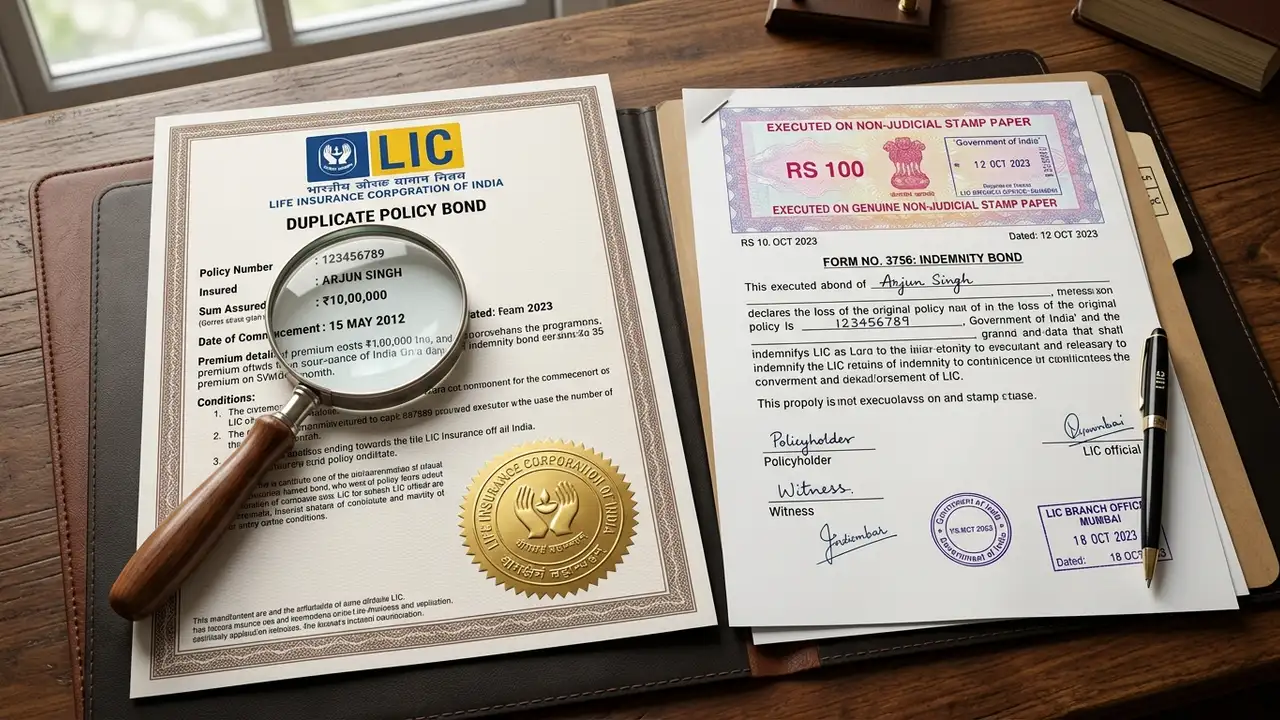
How to Get Duplicate LIC Policy Bond: Form 3756 & Process
 Policy Servicing & Surrender
How to Surrender LIC Policy Online & Offline (2026 Guide)
 LIC Safety & Governance