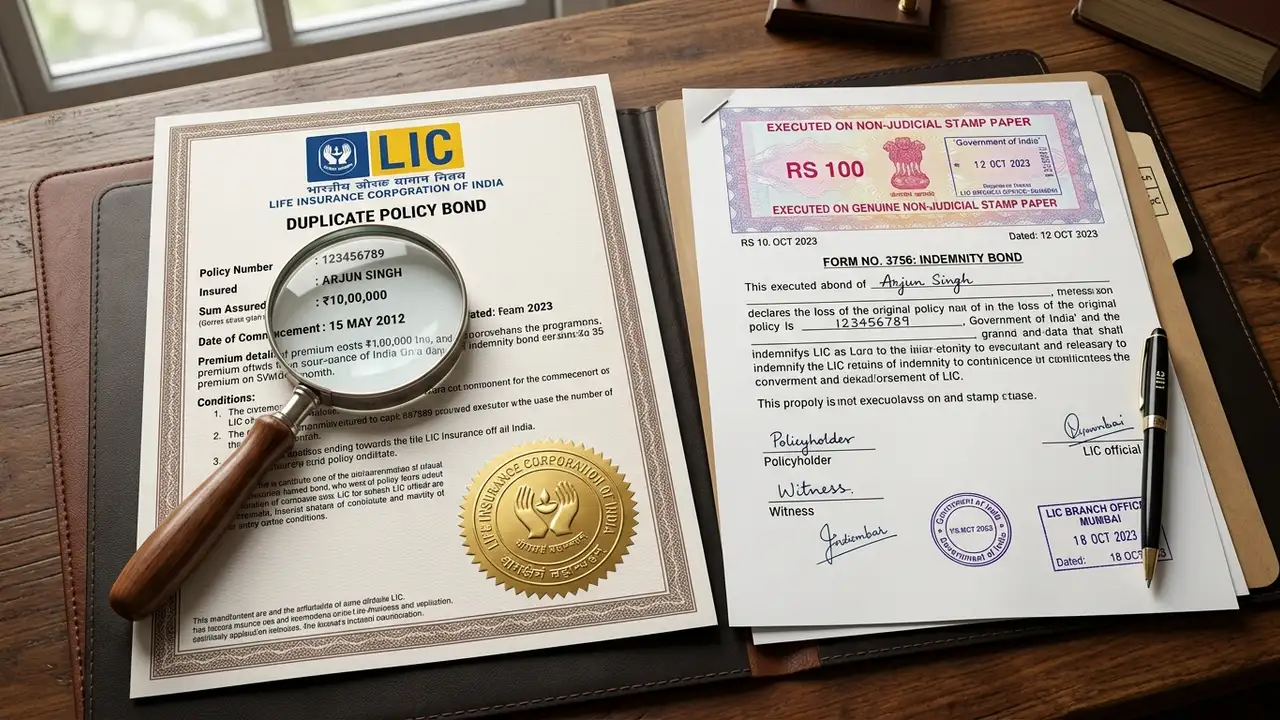
Life insurance is procured fundamentally to secure the financial survival of loved ones in the event of an untimely demise. Yet, millions of Indian policyholders overlook the single most critical administrative clause in their insurance contracts: the Nomination Clause. A policyholder may diligently pay regular premiums for two decades, but an outdated nomination, a deceased nominee on record, or an unrecorded post-marriage update can drag grieving families into prolonged, agonizing legal battles across civil and probate courts.
The legal landscape governing life insurance nominations underwent a massive transformation following the Insurance Laws (Amendment) Act of 2015. Prior to this landmark reform, a nominee was legally regarded as a mere "trustee" or "collector" who was legally bound to distribute claim proceeds among all statutory legal heirs under personal succession laws. Today, designating your spouse, children, or parents grants them unassailable Beneficial Nominee status with absolute ownership of the claim funds.
This definitive, actuarially verified operational guide provides an exhaustive roadmap to updating your nominee in 2026. From mastering LIC Form No. 3750 and appointing guardians for minor nominees to executing percentage share splits, managing Premier Services portal requests, and completing associated profile servicing (mobile, email, NEFT mandates, branch transfers, and signature updates), this manual ensures your life insurance proceeds reach your intended beneficiaries without bureaucratic resistance.
1. Statutory Framework: Section 39 & Nomination Legal Inception
The institution of nomination in Indian life insurance is statutorily governed by Section 39 of the Insurance Act, 1938. Understanding the legal anatomy of this provision is crucial for every policyholder:
- Statutory Definition & Purpose: Nomination is a formal legal authorization conferred by the policyholder (Life Assured) upon one or more individuals, entitling them to receive the policy's contractual death proceeds upon the insured person's death. Its primary legislative objective is to afford the insurer a valid legal discharge and provide the family immediate liquidity without the requirement of obtaining a probate of will or succession certificate from a civil court.
- Inception vs Subsequent Nomination: Nomination can be executed at the time of proposal inception (recorded in Clause 7 of the standard LIC proposal form) or at any subsequent date during the currency of the policy before it matures or terminates.
- Unilateral Power of Revocation (Section 39(2)): The policyholder retains an unfettered, unilateral right to cancel, alter, or replace the nomination at any time during their lifetime. The existing nominee acquires no vested property right during the policyholder's life; their consent, signature, or no-objection certificate (NOC) is never legally required to execute a change.
- Mandatory Delivery & Registration: Section 39(2) explicitly provides that no nomination or change of nomination shall be legally binding upon the Life Insurance Corporation of India unless written notice thereof in the prescribed format (Form 3750) has been formally delivered to and registered in the books of the Corporation at the servicing branch.
- Impact of Policy Assignment (Section 39(4)): If a policyholder executes an absolute assignment of the policy under Section 38 (e.g. assigning the policy to an individual or third party), such assignment automatically cancels all prior nominations. However, under Section 39(4), where an assignment is executed in favor of the insurer (LIC) as collateral security for a policy loan, the nomination is not cancelled; it is merely held in abeyance to the extent of LIC's debt lien and automatically revives upon full debt repayment.
Nomination takes legal effect solely and exclusively upon the death of the Life Assured. During the policyholder's lifetime, the nominee holds zero ownership, zero right to surrender the policy, zero entitlement to receive survival or maturity benefits, and zero power to borrow loans against the policy bond. All contractual powers reside exclusively with the living policyholder.
2. Beneficial Nominee vs Collector Nominee (2015 Amendment Act)
For over three decades, Indian insurance jurisprudence was anchored to the landmark Supreme Court ruling in Sarbati Devi v. Usha Devi (1984 1 SCC 424). In that historic judgment, the Apex Court ruled that nomination under Section 39 did not confer any beneficial interest on the nominee. The nominee was merely an authorized collector or custodian of the funds on behalf of all the legal heirs of the deceased. Consequently, even after receiving the death benefit from LIC, the nominee was legally compelled to hand over the money to legal heirs claiming under the Hindu Succession Act, 1956 or Indian Succession Act, 1925.
To resolve endless family litigation and ensure that an insured's immediate dependents are truly protected, Parliament enacted the Insurance Laws (Amendment) Act, 2015, introducing revolutionary sub-sections 39(7) and 39(8).
Section 39(7) of the Insurance Act 1938 (Post-2015 Amendment):
"Where the holder of a policy of life insurance on his own life nominates his parents, or his spouse, or his children, or his spouse and children, or any of them, the nominee or nominees shall be beneficially entitled to the amount payable by the insurer to him or them under sub-section (6)..."
This statutory provision establishes that proceeds paid to beneficial nominees belong to them exclusively, completely extinguishing the claims of any other legal heirs under personal succession laws.
| Legal Parameter | Beneficial Nominee (Sec 39(7)) | Collector Nominee (Sec 39(8)) |
|---|---|---|
| Eligible Relationships | Spouse, Children, Father, Mother (individually or jointly) | Brother, Sister, Nephew, Niece, In-laws, Friends, Third Parties |
| Beneficial Ownership of Funds | Absolute & Complete Ownership. Proceeds belong exclusively to them. | Fiduciary Custodian Only. Holds funds in trust for lawful legal heirs. |
| Claims by Other Legal Heirs | Completely Extinguished by law under Section 39(7). | Legal heirs can sue nominee in civil court to claim their succession share. |
| Part of Deceased's General Estate? | No. Kept outside general estate assets. | Yes. Forms part of general estate for testamentary distribution. |
| Discharge to LIC | Valid and final discharge. | Valid and final discharge (LIC's liability ends upon payment). |
If you purchased your LIC policy before marriage and nominated your brother or sister, they remain a Collector Nominee. In the event of your death, your sibling does not legally inherit the death benefit; they are legally accountable to your surviving spouse and children under succession laws. To ensure seamless financial security without family disputes, execute Form 3750 immediately post-marriage to designate your spouse and children as Beneficial Nominees.
3. Appointee Rules for Minor Nominees (Under 18 Years)
Under the Indian Contract Act, 1872, an individual below the age of 18 years is a minor and lacks the legal capacity to execute a binding contract or sign a valid legal discharge voucher. Consequently, if an insurance policy designates a minor as nominee, LIC cannot directly disburse claim monies to that minor.
To resolve this statutory hurdle, Section 39(1) of the Insurance Act mandates the designation of an Appointee (Guardian) whenever a nominee is a minor:
Rule 1: Life Assured Cannot Be Appointee
The policyholder cannot nominate themselves as appointee. Because the nomination deed only executes upon the death of the policyholder, the appointee must be an independent living adult who will step in upon the policyholder's demise.
Rule 2: Ideal Appointees (Surviving Parent or Grandparent)
The surviving spouse (mother or father of the minor child) is the most standard and legally robust appointee choice. Alternatively, grandparents, uncles, or aunts can be appointed, provided they are competent major adults with clean KYC records.
Rule 3: Form 3750 Section B Appointee Consent
The appointee must formally append their signature to Section B of Form 3750, endorsing the statement: "I hereby consent to act as Appointee to receive the policy moneys in trust for the minor nominee in the event of the death of the Life Assured during the minority of the nominee."
Rule 4: Automatic Cessation of Appointee Authority at 18
The moment the minor nominee celebrates their 18th birthday, they attain the age of majority. By operation of law, the appointee's authority automatically extinguishes. No supplementary endorsement, branch fee, or form submission is necessary. If the policyholder dies after the nominee turns 18, LIC disburses the entire claim directly to the nominee.
If your designated appointee passes away before you, and your child is still under 18 years of age, you must submit a fresh Form 3750 to appoint a successor appointee immediately. If the policyholder dies leaving a minor nominee with a deceased appointee, LIC cannot release the death claim until a competent guardian is appointed by a civil court under the Guardians and Wards Act, 1890—a process that routinely takes 12 to 24 months in Indian courts.
4. Multiple Nominees & Percentage Share Allocation Rules
Under Section 39(5) of the Insurance Act, a policyholder is fully entitled to nominate more than one individual to receive the policy proceeds. Multiple nominations allow you to divide the financial protection among family members according to their dependency levels.
Mandatory Operational Rules for Multiple Nominees:
- The 100% Cumulative Allocation Mandate: The total sum of percentage shares allocated across all nominees must equal exactly 100%. LIC systems reject fractional imbalances (e.g. 50% + 40% = 90% or total exceeding 100%). Whole integers are strictly recommended.
- Separate KYC & Bank Details: Each nominee must have individual KYC documents (Aadhaar and PAN) on record. Upon claim settlement, LIC does not issue a single combined cheque; separate electronic NEFT credits are transferred directly to each nominee's verified personal bank account according to their specified share.
| Family Situation | Nominee Particulars | Share Allocation | Appointee Required? |
|---|---|---|---|
| Married with One Minor Child | Spouse (Wife/Husband) | 60% | No (Adult) |
| Child (Age 7) | 40% | Yes (Spouse appointed as Guardian) | |
| Married with Dependent Parents | Spouse | 50% | No (Adult) |
| Mother | 25% | No (Adult) | |
| Father | 25% | No (Adult) | |
| Single Individual (Parents Dependent) | Mother | 50% | No (Adult) |
| Father | 50% | No (Adult) |
What happens if you have nominated your spouse (50%) and your brother (50%), and your brother predeceases you? Under Section 39(6), the nomination in favor of your deceased brother becomes legally void. Crucially, his 50% share does not automatically transfer to your surviving spouse. Instead, that 50% falls into the deceased policyholder's estate and requires succession documentation unless a fresh Form 3750 was registered before death. Therefore, always revise your nomination deed immediately upon the demise of any co-nominee.
5. Line-by-Line Guide to LIC Form 3750 (Notice of Nomination Change)
LIC Form No. 3750 (entitled "Notice of Change or Cancellation of Nomination under Section 39 of Insurance Act, 1938") is the official statutory instrument required to execute a change. Completing each block accurately prevents clerical rejections:
Branch & Policy Master Identification
Enter the Servicing Branch Code and Division Office name printed on your policy bond. Fill your 9-digit Policy Number, Basic Sum Assured, Date of Commencement (DOC), and the Full Legal Name of the Life Assured in capital block letters.
Formal Revocation Clause
The pre-printed preamble states: "I hereby give notice that I have revoked the nomination previously made by me under the above policy and do hereby nominate the following person(s)...". Clearly mention the full name of the existing nominee whose name is being cancelled.
Section A: Particulars of Fresh Nominee(s)
Provide the Full Name of the new nominee, exact relationship to the policyholder (e.g. "Wife", "Son"), exact Date of Birth (DD/MM/YYYY), completed age in years, permanent residential address, PAN/Aadhaar numbers, and the percentage share allocated (e.g. 100% or split shares).
Section B: Declaration & Consent of Appointee (If Nominee is Minor)
If any nominee is below 18 years of age, enter the Appointee's Full Name, relationship to minor (e.g. "Mother"), residential address, and mobile number. The Appointee must sign their legal consent in the dedicated signature box.
Policyholder's Signature & Date
The policyholder must sign with place and date. Critical: The signature must match the specimen signature in LIC's proposal micro-film records. If your signature has evolved, follow the signature indemnity protocol in Section 11.
Witness Attestation (Mandatory Requirement)
The execution must be witnessed by a person of legal standing: an LIC Agent, Development Officer (DO), Branch Manager, Gazetted Officer, School Headmaster, or Bank Manager. The witness must sign, record their full address, designation, and registration/agency code.
Under IRDAI fee schedules, LIC levies a nominal statutory fee for registering a change or cancellation of nomination under Section 39: typically ₹50.00 plus 18% GST (Total ₹59.00) or ₹100.00 for older non-computerized ledger records. The fee can be paid at the branch cash counter or through the customer portal during online initiation. Always preserve the computerized fee receipt (BOC - Branch Office Collection receipt).
6. Mandatory Physical Document Dossier Checklist
When submitting your nomination change packet to the servicing branch, compile the following complete document dossier to ensure same-day verification:
Duly Executed Form No. 3750 (In Duplicate)
Completed in English or Hindi, signed by the policyholder and attested by an authorized witness. Submit in duplicate so one copy is stamped as your acknowledgment.
Original LIC Policy Bond (Mandatory Non-Negotiable)
The physical paper policy certificate issued at inception. LIC must physically type or stamp the official Endorsement Deed on the back of the bond. A photocopy is strictly rejected.
Self-Attested KYC of the Policyholder
Clear photocopies of the policyholder's PAN Card and Aadhaar Card, self-attested with modern signature and date.
Self-Attested KYC of the New Nominee(s)
Aadhaar Card, Passport, Voter ID, or PAN Card of the nominee. If the nominee is a minor, provide their official Municipal Birth Certificate or School Leaving Certificate showing exact Date of Birth.
Proof of Relationship with Life Assured
Government-issued proof corroborating the relationship: Marriage Certificate (for spouse), Birth Certificate (for child), or Passport/Aadhaar carrying the policyholder's parentage/spouse details.
Appointee KYC & Written Consent (If Nominee is Minor)
Self-attested PAN and Aadhaar card copies of the Appointee, along with their signed consent in Section B of Form 3750.
7. Online Initiation via LIC Portal vs Home Branch Endorsement
A ubiquitous question among tech-savvy policyholders is: "Can I change my LIC nominee 100% online from home?" The actuarial and legal reality requires clear demystification.
Under statutory guidelines of Section 39, an insurer must record the nomination change in its register and endorse the same upon the policy document. While LIC has introduced robust digital initiation via its Customer Portal (Premier Services), the process remains a hybrid workflow: data entry, fee payment, and tracking happen online, while the physical endorsement requires submitting the policy bond.
Enroll in LIC Customer Portal & Upgrade to Premier Services
Register your policy on ebiz.licindia.in or the LIC Digital Mobile App. To unlock servicing requests, upgrade to "Premier Services" by uploading your PAN card, Aadhaar, and policy document for one-time branch verification.
Initiate Online Nomination Change Request
Navigate to "Service Requests" → "Nomination Change". Select your policy, enter the new nominee's name, DOB, relation, Aadhaar, and percentage allocation. If minor, input the appointee particulars.
Digital Fee Payment & Pre-Filled Form Generation
Pay the statutory endorsement fee (₹59 via UPI, Netbanking, or Debit Card). The system generates a barcode-enabled, pre-filled Form 3750 and a formal Service Request Number (SRN).
Submit Original Bond to Servicing Branch
Print the pre-filled Form 3750, sign across the policyholder signature box, get it witnessed, and submit it along with the original policy bond to your home servicing branch (either in person or via insured Speed Post citing the SRN).
Endorsement & Return of Bond
The branch servicing desk verifies the signature against original records, updates the central database, prints the official Endorsement Deed on the back of the bond, stamps it with the branch seal, and returns the endorsed bond to you.
8. How to Update Mobile Number & Email ID Online (Paperless)
Unlike nomination changes that require physical bond endorsements, updating your mobile number and email address is 100% paperless, instantaneous, and requires zero branch visits. Maintaining an updated phone number is mandatory to receive premium due alerts, transaction OTPs, revival discount campaign notices, and electronic claim receipts.
Method A: Direct Web Portal Updation (No Login Required)
1. Visit the official LIC portal at licindia.in and click on "Customer Services" → "Update Contact Details (Online)".
2. Enter your Full Name (as per policy), Date of Birth, 9-digit Policy Number, and existing Mobile Number.
3. Submit the declaration; the portal prompts authentication via an OTP sent to your registered Aadhaar mobile number or DigiLocker.
4. Upon validation, enter your new 10-digit mobile number and new email address.
5. Enter the dual OTPs received on both the new mobile and new email to execute the change immediately across all mapped policies.
Method B: LIC Digital Mobile App (Android / iOS)
1. Open the LIC Digital App and log in with your MPIN or biometrics.
2. Tap the Profile icon at the top right and select "My Profile" → "Contact Details".
3. Click the edit pencil icon beside Mobile Number or Email ID.
4. Authenticate the security prompt via OTP, enter the updated details, and confirm.
5. The central database updates within 15 minutes, and an automated SMS confirmation is dispatched to both old and new numbers.
9. Bank Account & NEFT Mandate Registration (Form 5180)
Under current IRDAI payment regulations, LIC has completely phased out physical paper cheques for policy disbursements. All policy transactions—including intermediate Money-Back survival benefits, policy loans, maturity claims, and death claim settlements—are routed 100% electronically via National Electronic Funds Transfer (NEFT).
If your policy ledger does not have a validated NEFT mandate on file, payouts are blocked and withheld in LIC's suspense accounts.
Form No. 5180 is the standardized legal authorization for electronic direct credits. It records the policyholder's Bank Account Number, Account Type (Savings or Current), Bank Name, Branch Name, and the 11-character Indian Financial System Code (IFSC).
Strict Rules for NEFT Bank Account Registration:
- Account Holder Matching: The bank account must stand in the primary name of the Life Assured. In joint bank accounts, the policyholder must be the first/primary account holder. Third-party accounts (e.g. spouse's sole account or friend's account) are categorically rejected under anti-money laundering (AML) protocols.
- Personalized Cancelled Cheque Leaf: You must attach an original cancelled cheque leaf displaying the pre-printed name of the policyholder, bank account number, and IFSC code. Cheques with handwritten names are rejected.
- Alternative if Personalized Cheque Unavailable: If your bank cheque book does not have your name printed on it, attach a photocopy of the first page of your bank passbook (or bank account statement not older than 3 months) carrying the bank branch manager's signature, official stamp, and date.
- Submission & Verification: Submit Form 5180 with the cancelled cheque to any LIC branch. The bank validation completes within 3 to 5 business days, confirmed via an SMS alert.
10. Policy Branch Transfer Procedure (Inter-Division Relocation)
Many policyholders relocate to different cities or states during their careers. While LIC's nationwide network allows you to pay renewal premiums at any branch or online via UPI/netbanking, the physical policy docket (containing your original signed proposal form, medical examination reports, and underwriting notes) remains permanently housed at your original Home Servicing Branch.
Certain critical policy servicing operations—such as taking a policy loan, registering duplicate policy bonds, altering policy terms, or settling final death/maturity claims—are managed with far greater speed when your policy docket is stationed at your local city branch.
Submit Policy Transfer Request Letter
Write a formal application addressed to the Branch Manager of your existing servicing branch OR your proposed destination branch. Specify your policy number, current servicing branch code, new address, and the target branch code where you wish to transfer the docket.
Enclose Address Proof & Policy Bond Copy
Attach valid residential address proof of your new location (Aadhaar Card, updated Electricity/Water bill, registered Rent Agreement, or Bank Passbook) along with a photocopy of your policy bond.
Electronic Transfer (48-72 Hours)
The originating branch issues an inter-branch transfer advice in LIC's central intranet. The servicing branch code updates electronically within 2 to 3 working days, enabling the destination branch to access your electronic master ledger.
Physical Docket Transit (2 to 4 Weeks)
The physical paper docket is packed, cataloged, and dispatched via insured registered parcel through the Divisional Office to the destination branch. Once received, the destination branch becomes your permanent home servicing branch.
11. Date of Birth, Name & Signature Correction Protocols
Discrepancies in personal profile records can halt claim processing or loan approvals. Addressing these discrepancies proactively prevents last-minute rejections:
A. Date of Birth (DOB) Correction
Insurance premiums are actuarially calibrated based on your exact age at entry. If your date of birth is wrongly recorded on the policy bond, submit a written correction request along with a Standard Age Proof:
- Recognized Standard Proofs: Municipal Birth Certificate, School Leaving Certificate / Matriculation (10th) Certificate, Passport, or PAN Card.
- Actuarial Adjustment: If your actual age was older than recorded at inception, LIC will calculate the undercharged premium difference and recover it along with interest. Conversely, if your actual age was younger, LIC refunds the excess premium collected without interest.
B. Name Spelling & Legal Name Change Corrections
If your name has a minor clerical misspelling on the policy bond (e.g. "Suresh Chandra" vs "Suresh Chander"), the branch can correct it by verifying your self-attested Aadhaar and PAN card. However, if your name changed fundamentally (e.g. a woman changing her surname post-marriage or a legal change of name), submit:
- Marriage Certificate or official State/Central Government Gazette Notification.
- Updated Aadhaar Card and PAN Card carrying the new legal name.
- Original Policy Bond for physical endorsement of the change of name.
C. Signature Mismatch Protocol (Form No. 3251)
Over decades of policy tenure, a policyholder's handwriting and signature naturally evolve. If the servicing branch flags that your current signature does not match the specimen signature executed on the original proposal form 15 or 20 years ago:
- Execute Form No. 3251 (Letter of Indemnity for Change of Signature).
- Visit your commercial bank where you maintain an active savings account. Request your Bank Branch Manager to attest your new specimen signature on their official letterhead with bank seal and employee code.
- Attach self-attested copies of your PAN Card, Aadhaar Card, and Passport displaying your current signature style.
Content validated against Section 39 of Insurance Act 1938, Insurance Laws (Amendment) Act 2015, IRDAI (Protection of Policyholders' Interests) Regulations, and Life Insurance Corporation of India Master Policy Servicing Circulars (2025-2026).