LIC Retirement Corpus & Pension Calculator
Model your post-retirement financial independence. Calculate future inflation-adjusted living costs, required retirement corpus, and the monthly savings needed to secure a lifelong sovereign pension.
Invest this amount regularly in a disciplined blend of LIC participating policies (e.g. Jeevan Labh or SIIP) to accumulate your required retirement corpus.
LIC Annuity Conversion Strategy
At age 60, transferring ₹5,65,38,811 into LIC Jeevan Akshay VII (Plan 857) Option F will produce approximately ₹30,67,012 per year (₹2,55,584/month) in guaranteed lifelong pension, with 100% of your capital returned to your family upon your passing.
Navigating Retirement Planning in the Indian Economy
Unlike developed economies with comprehensive social security safety nets, Indian retirees must self-fund their post-retirement living expenses, medical emergencies, and healthcare costs. Without disciplined early planning, inflation quickly erodes accumulated savings:
The Accumulation Phase
During your earning years (ages 25 to 55), the priority is wealth creation and life protection. Combining long-term LIC participating policies (such as Jeevan Labh Plan 936 or SIIP Plan 852) with provident funds helps systematically build your required capital pool.
The Distribution Phase
Upon reaching retirement, capital protection and guaranteed monthly cash flow supersede growth speculation. Committing your accumulated corpus into LIC immediate or deferred annuities guarantees you never run out of money regardless of longevity.
Frequently Asked Questions (FAQs)
What happens if I live beyond my expected life expectancy?▼
How can I start retirement planning if I am already over 45?▼
How does the 4% Safe Withdrawal Rate (SWR) rule apply in India?▼
Which is better for retirement: LIC Jeevan Umang or Jeevan Utsav?▼
Are monthly pension payouts from LIC annuities taxed as salary or other income?▼
Related Financial & Investment Calculators
Compare annual yields, project compound growth, estimate bonus accumulation, or audit tax benefits.
Related In-Depth Guides & Rules
Fact-checked actuarial procedures, official circulars, and line-by-line form guides for FY 2026-27
 Pension & Annuity
How to Submit LIC Life Certificate Online (Jeevan Pramaan DLC)
 Maturity & Claims
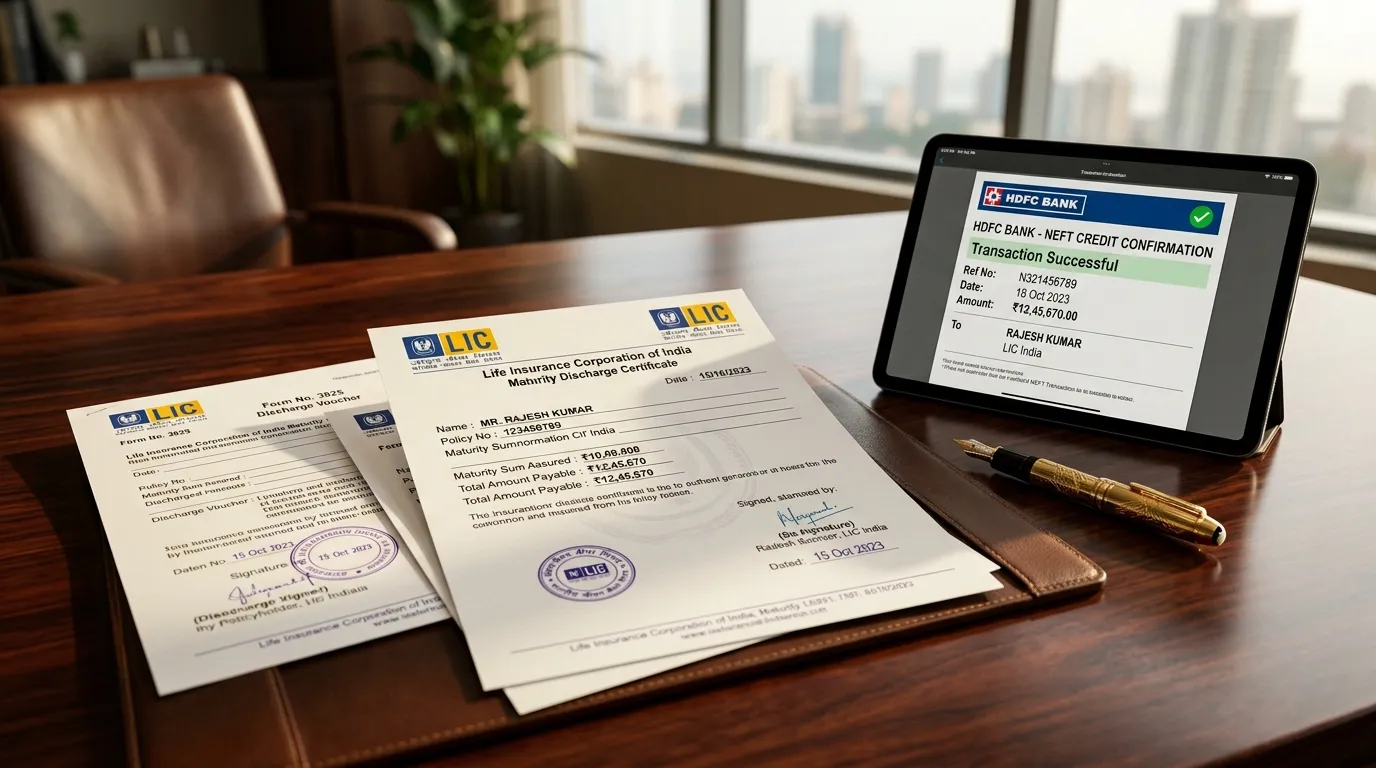
How to Claim LIC Policy Maturity: Form 3825 & Payout Guide
 Policy Servicing & KYC
How to Link PAN & Aadhaar with LIC Policy Online (2026)
 Customer Support & Grievance