1. What is Survival Benefit in LIC? Fundamental Actuarial Concept
In life insurance mathematics, a Survival Benefit (SB) represents a contractual, predetermined cash payout disbursed to the policyholder upon surviving specified milestone durations during the policy term. Unlike standard pure term assurance—which pays out strictly upon the death of the life assured—or traditional endowment assurance—which reserves all financial disbursements until the final maturity date—participating money-back contracts incorporate periodic liquidity windows directly into their actuarial design.
Under the regulatory governance of the Insurance Regulatory and Development Authority of India (IRDAI) and the operational rules of the Life Insurance Corporation of India (LICI), Survival Benefits serve three paramount financial functions for Indian households:
- Predictable Liquidity Milestones: Enabling families to fund milestone capital expenditures—such as higher education admission installments, home renovation deposits, or international travel—without liquidating long-term assets or incurring costly unsecured personal loans.
- Continuous Risk Coverage Retention: Unlike a policy loan or partial withdrawal in unit-linked plans, receiving an intermediate survival installment does not compromise, reduce, or disrupt the primary life insurance cover (Basic Sum Assured) protecting the policyholder's dependents.
- Inflation Hedging: Receiving regular cash inflows every 3, 4, or 5 years enables policyholders to reinvest capital into prevailing high-yield financial instruments, offsetting the purchasing power drag inherent in 20- or 25-year fixed contracts.
i Actuarial Definition Under IRDAI Master Circular
A Survival Benefit is formally defined as an installment of the Basic Sum Assured payable on the life assured surviving to a specified date during the subsistence of the policy, provided all due premiums up to that milestone date have been paid in full without lapse.
LIC Survival Benefit vs Death Claim Payout Architecture
2. Survival Benefit vs Traditional Endowment: Structural Difference
Policyholders frequently confuse money-back insurance plans with standard endowment assurances like LIC Jeevan Labh (Plan 936) or LIC Jeevan Anand (Plan 915). While both product classes participate in corporate profits through Simple Reversionary Bonuses (SRB), their capital distribution schedules are radically distinct:
| Actuarial Dimension | Money-Back Plans (e.g., Plan 920 / 921) | Traditional Endowment (e.g., Jeevan Labh 936) |
|---|---|---|
| Survival Benefit Payouts | Periodic guaranteed cash releases (15%–20% SA every 5 yrs) | Strictly 0% during the policy term |
| Liquidity Profile | High liquidity; automated milestone NEFT transfers | Illiquid; capital locked until policy maturity or surrender |
| Maturity Settlement | Residual Sum Assured (40%) + Accrued Bonuses | 100% Basic Sum Assured + Accrued Bonuses |
| Death Benefit Protection | 125% of Basic Sum Assured + Full Accrued Bonuses | 100% or 125% of Basic Sum Assured + Full Accrued Bonuses |
| Impact of Prior SB on Death Claim | Zero deduction (Contractual statutory guarantee) | Not applicable (No prior payouts exist) |
| Premium Rate per ₹1,000 SA | Higher premium (due to early liquidity payout discount) | Moderate to lower premium per unit of sum assured |
3. Popular LIC Money-Back Plans & Survival Payout Schedules
The Corporation has structured diverse money-back products tailored to varying horizons, risk tolerances, and premium paying capabilities. Below are the definitive actuarial payout schedules across contemporary and legacy plans:
A. LIC 20-Year Money Back Policy (Plan 920 / Table 920)
Term: 20 Yrs | PPT: 15 YrsOne of India's most popular participating life insurance contracts. Premiums are payable for 15 years, while life risk coverage extends across the full 20-year term.
- At End of 5th Policy Year: 20% of Basic Sum Assured credited via NEFT.
- At End of 10th Policy Year: 20% of Basic Sum Assured credited via NEFT.
- At End of 15th Policy Year: 20% of Basic Sum Assured credited via NEFT (Total SB = 60%).
- At End of 20th Year (Maturity): Remaining 40% of Basic Sum Assured + Vested Simple Reversionary Bonuses for 20 years + Final Additional Bonus (FAB, if eligible).
B. LIC 25-Year Money Back Policy (Plan 921 / Table 921)
Term: 25 Yrs | PPT: 20 YrsDesigned for long-term goal financing across four distinct milestone intervals. Premium paying term is limited to 20 years.
- At End of 5th Year: 15% of Basic Sum Assured.
- At End of 10th Year: 15% of Basic Sum Assured.
- At End of 15th Year: 15% of Basic Sum Assured.
- At End of 20th Year: 15% of Basic Sum Assured (Total SB = 60%).
- At End of 25th Year (Maturity): Balance 40% of Basic Sum Assured + Vested Simple Reversionary Bonuses for 25 years + Final Additional Bonus.
C. LIC Dhan Rekha (Plan 863) — Non-Linked, Guaranteed Additions
Terms: 20, 30, 40 YrsA modern non-participating plan providing contractual Guaranteed Additions ranging from ₹50 to ₹60 per ₹1,000 Sum Assured. Survival benefits scale by policy term:
- 20-Year Term (PPT 10 yrs): 10% of SA at 10th & 15th year (Maturity = 80% SA + Guaranteed Additions).
- 30-Year Term (PPT 15 yrs): 15% of SA at 15th, 20th & 25th year (Maturity = 55% SA + Guaranteed Additions).
- 40-Year Term (PPT 20 yrs): 20% of SA at 20th, 25th, 30th & 35th year (Maturity = 20% SA + Guaranteed Additions).
D. LIC Bima Bachat (Plan 948) — Single Premium Money Back
Single Premium | Terms: 9, 12, 15 YrsA single premium plan where a one-time lump-sum deposit generates 15% cash back every 3 years.
- 9-Year Term: 15% of Sum Assured at end of 3rd and 6th year.
- 12-Year Term: 15% of Sum Assured at end of 3rd, 6th, and 9th year.
- 15-Year Term: 15% of Sum Assured at end of 3rd, 6th, 9th, and 12th year.
- Maturity Settlement: 100% refund of Single Premium paid (excluding taxes) + Loyalty Additions.
4. The Non-Deduction Guarantee: Actuarial Death Claim Math
The single most important consumer protection embedded in LIC money-back policies is the Statutory Non-Deduction Clause. In commercial lending or consumer overdrafts, drawing funds reduces the residual principal balance. In sharp contrast, life insurance actuarial science dictates that survival payouts are treated as independent milestone distributions.
✓ The Golden Rule of Money-Back Claims
If death occurs at any time during the policy term (even one day before the final maturity date), the nominee is paid 100% to 125% of the full Basic Sum Assured plus all accrued reversionary bonuses. LIC is legally barred from subtracting previously paid survival benefit installments from the death claim settlement!
Comprehensive Actuarial Case Study: Plan 920
Consider Mr. Rajesh Sharma, age 32, who purchases LIC 20-Year Money Back Policy (Plan 920) with a Basic Sum Assured of ₹10,00,000.
Milestones During Active Life:
- Year 5: Rajesh receives 20% of ₹10,00,000 = ₹2,00,000 via NEFT.
- Year 10: Rajesh receives 20% of ₹10,00,000 = ₹2,00,000 via NEFT.
- Year 15: Rajesh receives 20% of ₹10,00,000 = ₹2,00,000 via NEFT.
- Total Cash Collected by Rajesh = ₹6,00,000.
Tragic Event: Death Occurs in Year 18
Rajesh passes away in policy year 18 after all 15 years of premiums were fully remitted.
Sum Assured on Death (125% of Basic SA): ₹12,50,000
Accrued Bonuses (18 yrs @ ₹39/thousand/yr): ₹7,02,000
Final Additional Bonus (FAB @ ₹45/thousand): ₹45,000
Deduction for ₹6,00,000 Survival Benefits previously received = ₹0 (Zero).
5. How Survival Benefits Are Disbursed: Automated NEFT Direct Credit
Prior to the digitalization drive mandated by IRDAI circulars, policyholders were required to visit their home servicing branch, sign a formal survival discharge voucher (Form 5180), and await a physical paper cheque drawn on Axis Bank or State Bank of India.
Under modern operational frameworks, Survival Benefits are 100% automated:
- System Generated Milestone Trigger: 60 days before the scheduled policy anniversary, the LIC central e-FEAP core banking system automatically detects the upcoming milestone and verifies the in-force status of the policy.
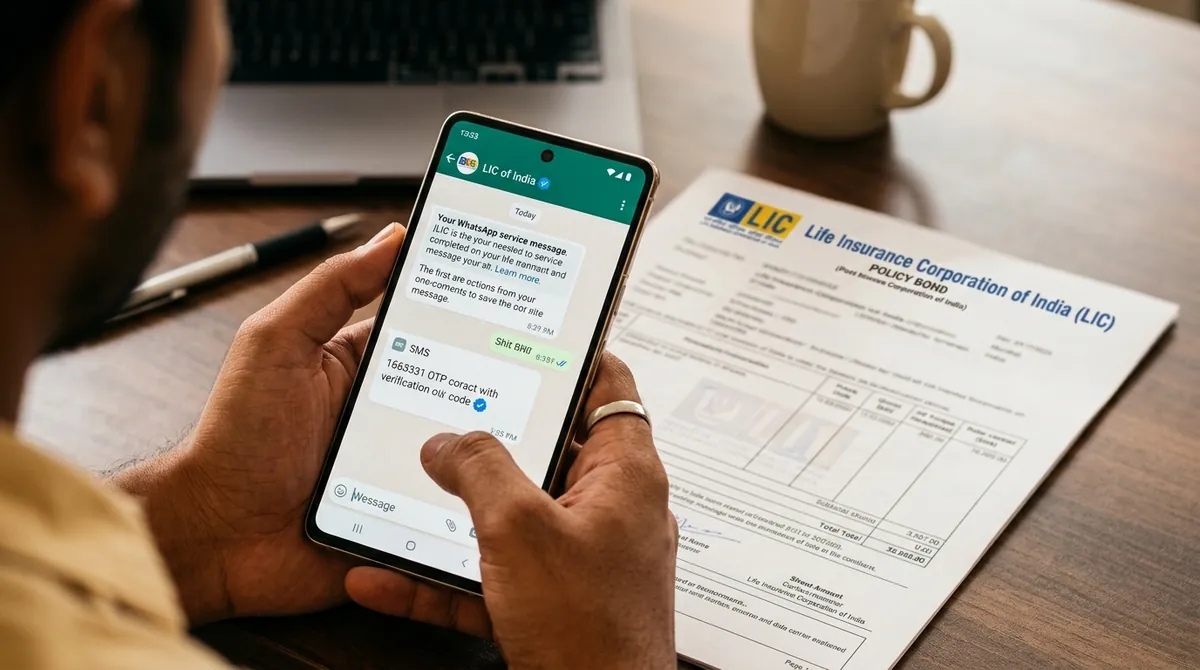
- NEFT Validation Check: The system validates whether an active bank mandate exists on file via LIC Form 5821.
- Discharge Notice Transmission: An intimation SMS and email are dispatched to the policyholder's registered mobile number confirming the due date and net payable amount.
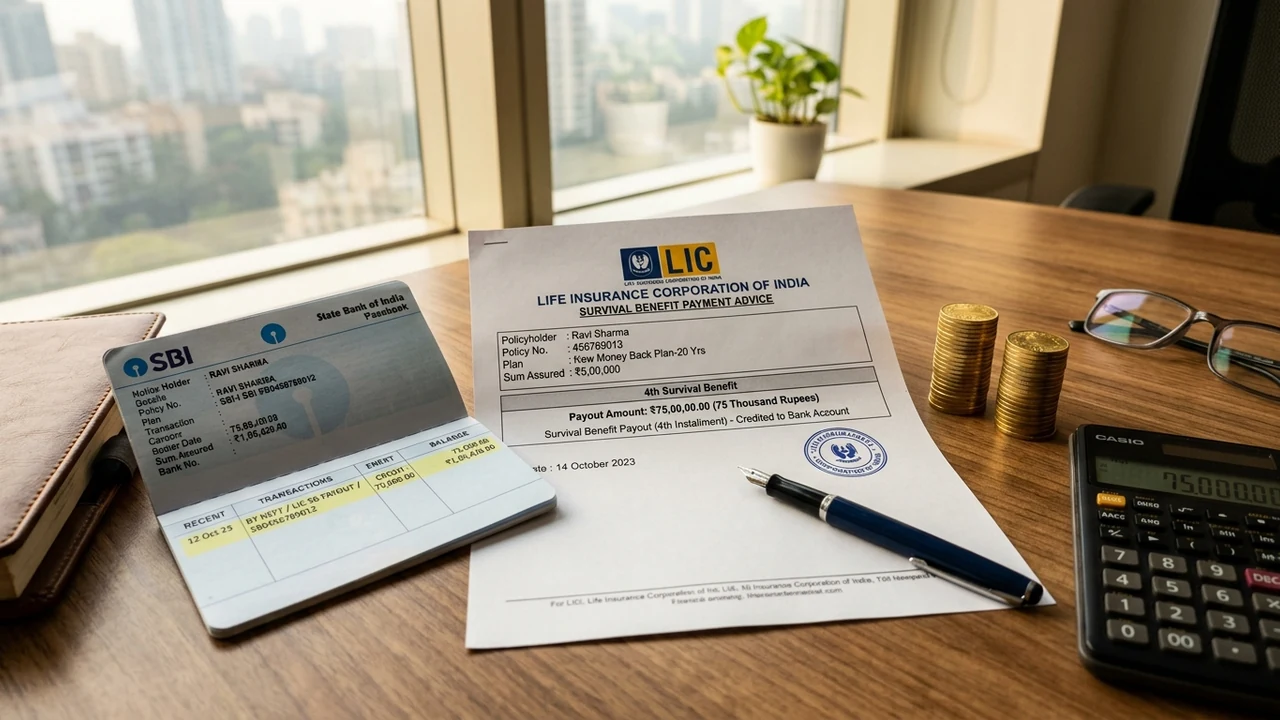
- Direct Electronic Credit: On the exact anniversary date (or the immediate next banking day if falling on a Sunday or RTGS holiday), the funds are credited via RBI-NEFT directly to the registered bank account.
Critical Requirement: Active NEFT Registration
If your bank details have not been submitted via Form 5821, or if you hold an old cooperative bank account that underwent IFSC consolidation, the automated NEFT batch will fail. The survival benefit will then be redirected into LIC's Stale/Unclaimed Fund ledger where it sits idle earning zero interest until claimed!
6. Troubleshooting: What to Do If Your Survival Benefit Is Delayed or Missing
If your policy anniversary has passed and the expected survival benefit has not appeared in your bank account, execute the following 4-step resolution protocol:
Check FUP Date & Premium Status
Survival benefits are released strictly if all premiums due prior to the anniversary date are fully cleared. If your policy is under grace or lapsed, the payout is automatically frozen until arrears are remitted.
Verify Customer Portal NEFT Status
Log in to the LIC Customer Portal (customer.licindia.in). Navigate to Policy Servicing > NEFT Details to confirm whether your bank account number and IFSC code show as "Verified & Active".
Submit Form 5821 with Cancelled Cheque
If bank details are absent or incorrect, download Form 5821, attach an original pre-printed cancelled cheque leaf, and submit it at the nearest branch counter. The pending SB will disburse within 3 business days of verification.
Escalate via Grievance Redressal (Bima Bharosa)
If the branch fails to disburse within 15 days of NEFT mandate update, lodge a formal dispute on IRDAI's Bima Bharosa portal citing Section 14 of IRDAI Policyholder Protection Regulations.
7. Income Tax Rules: Section 10(10D) Exemption & TDS Under Section 194DA
The taxability of Survival Benefits is governed by the statutory provisions of Section 10(10D) of the Indian Income Tax Act, 1961:
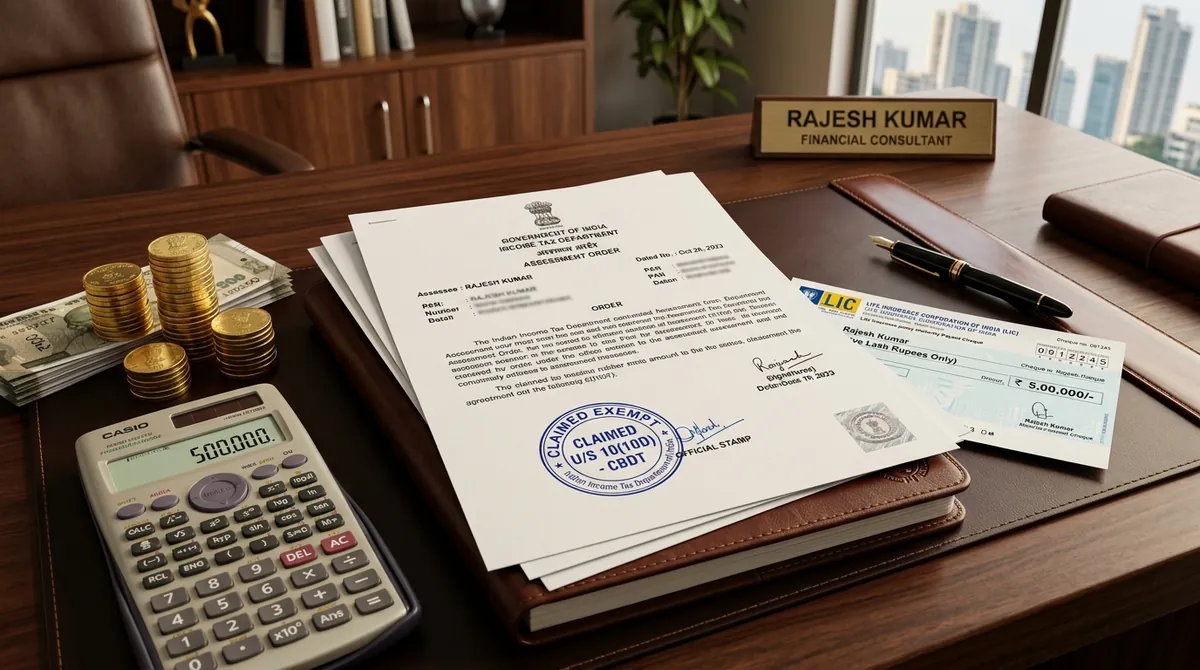
- Policies Issued Between April 1, 2012 and March 31, 2023: If the annual premium payable across any policy year does not exceed 10% of the actual Basic Sum Assured, all survival payouts and maturity bonuses are 100% tax-free in the hands of the policyholder.
- Policies Issued On or After April 1, 2023 (Finance Act 2023 Amendment): For non-ULIP traditional policies where the aggregate annual premium across one or multiple policies exceeds ₹5,00,000, the income component embedded within survival benefits is taxable as "Income from Other Sources" at the policyholder's applicable slab rate.
- Death Benefit Tax Exemption: Irrespective of the premium size or issue date, death benefits paid to the nominee remain 100% tax-free without any monetary ceiling under Section 10(10D).
- TDS Deductions Under Section 194DA: If a survival benefit fails the Section 10(10D) exemption criteria and the taxable payout exceeds ₹1,00,000 in a financial year, LIC deducts Tax Deducted at Source (TDS) at 5% on the net profit portion (provided PAN is linked). If PAN is not linked, TDS is deducted at 20% under Section 206AA.
8. Survival Benefit Rules for Paid-Up and Lapsed Policies
What happens to your survival benefits if you stop paying premiums after completing the mandatory 2 or 3 years?
A. Completely Lapsed Policy (< 2 Full Years of Premiums Paid):
All contractual benefits cease. No survival benefit will be credited. The policyholder forfeits all rights until the contract is revived under an official LIC Special Revival Campaign.
B. Reduced Paid-Up Policy (≥ 2 Full Years of Premiums Paid):
Under IRDAI Non-Linked Regulations, if at least two full years' premiums have been remitted, the policy acquires Paid-Up status. However, in traditional money-back contracts like Plan 920 and 921:
Intermediate Survival Benefits are CEASED. No milestone payouts are released during the remaining term. Instead, the proportionate Reduced Paid-Up Sum Assured along with vested reversionary bonuses is payable as a single consolidated lump sum at the end of the policy term or upon prior death!
Calculate Your Exact LIC Money-Back Milestones
Estimate your exact survival payouts, anniversary credit dates, and maturity bonus accruals with our actuarial Money-Back Plan Calculator.
9. Frequently Asked Questions (PAA)
Does receiving survival benefit reduce my LIC life cover?
No. In all LIC money-back plans (Plan 920, 921, 863, etc.), survival benefits are treated as independent milestone distributions. If the policyholder dies at any time during the policy term, the nominee receives 100% to 125% of the full Basic Sum Assured plus all accrued bonuses without any deduction of past survival benefits.
Do I need to submit an application or voucher to get my survival benefit?
No, provided your NEFT bank mandate is active. Modern LIC systems disburse survival benefits automatically via electronic bank transfer (NEFT) on the exact policy anniversary date. Physical vouchers (Form 5180) are only required if your bank details are missing or rejected.
Is LIC survival benefit taxable under Income Tax in India?
Survival benefits are completely tax-free under Section 10(10D) if the annual premium does not exceed 10% of the Basic Sum Assured. For policies issued after April 1, 2023, if total non-ULIP traditional premiums exceed ₹5,00,000 annually, the profit portion becomes taxable at slab rates.
What happens if my survival benefit milestone falls on a holiday or Sunday?
The electronic NEFT payment is processed on the immediate next banking working day under Reserve Bank of India settlement protocols.
Can I leave my survival benefit with LIC to earn interest?
In standard traditional plans like 920 and 921, survival benefits cannot be retained with LIC to earn compounding interest. However, in certain specific pension or flexi-endowment products (like Jeevan Umang where survival payouts represent 8% lifelong guaranteed cash), accumulation options may be offered under specified riders.
What if I have an outstanding loan on my LIC policy when SB is due?
Under LIC operating circulars, if there is overdue, unserviced loan interest on your policy loan account, LIC has the contractual right to adjust the pending interest from the incoming survival benefit and credit only the net balance to your bank account.
Can I change the bank account for my survival benefit payout?
Yes. You can update your bank account by submitting official LIC NEFT Mandate Form 5821 along with a personalized cancelled cheque leaf at any branch counter or through the LIC Customer Portal if your eKYC is verified. Submit the update at least 30 days prior to the milestone date.
Does a paid-up policy receive intermediate survival benefits?
No. When a money-back policy becomes reduced paid-up, all intermediate periodic survival benefits cease immediately. The proportionate Paid-Up value is preserved and paid as a single lump-sum payout upon maturity or death.